Chercheur en Sciences de Gestion et du Management
-
Contribution to the understanding of tribological properties of graphite intercalation compounds with metal chloride
- Type de publi. : Article dans une revue
- Date de publi. : 01/01/2012
-
Auteurs :
Karl DelbéJean-Louis MansotP. ThomasPhilippe BaranekFlorent BoucherRené VangelistiDenis Billaud
Fiche détaillée
Contribution to the understanding of tribological properties of graphite intercalation compounds with metal chloride
- Type de publi. : Article dans une revue
- Date de publi. : 01/01/2012
-
Auteurs :
Karl DelbéJean-Louis MansotP. ThomasPhilippe BaranekFlorent BoucherRené VangelistiDenis Billaud
-
Organismes :
Laboratoire Génie de Production
Groupe de Technologie des Surfaces et Interfaces [URp2_2]
Groupe de Technologie des Surfaces et Interfaces [URp2_2]
Matériaux et Mécanique des Composants
Institut des Matériaux Jean Rouxel
Institut Jean Lamour
Institut Jean Lamour
- Publié dans Tribology Letters le 25/10/2020
Résumé : Intrinsic tribological properties of lamellar compounds are usually attributed to the presence of van der Waals gaps in their structure through which interlayer interactions are weak. The controlled variation of the distances and interactions between graphene layers by intercalation of electrophilic species in graphite is used in order to explore more deeply the friction reduction properties of low-dimensional compounds. Three graphite intercalation compounds with antimony pentachloride, iron trichloride and aluminium trichloride are studied. Their tribological properties are correlated to their structural parameters, and the interlayer interactions are deduced from ab initio bands structure calculations.
Fichiers liés :
Delbe_6330.pdf
Source
-
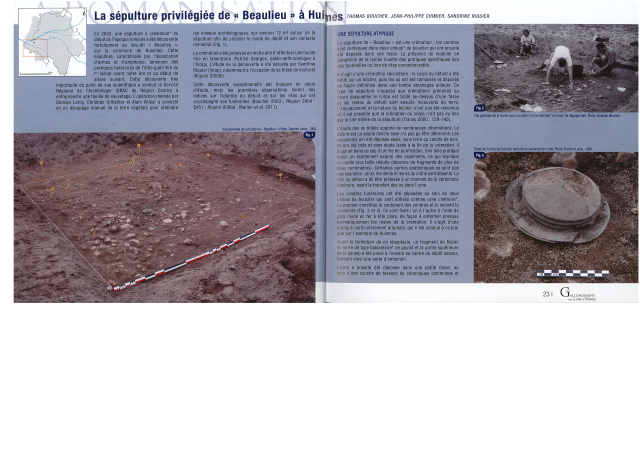
La sépulture privilégiée de " Beaulieu " à Huismes
- Type de publi. : Chapître d'ouvrage
- Date de publi. : 01/01/2012
-
Auteurs :
Thomas BoucherJean-Philippe ChimierSandrine Linger-Riquier
Fiche détaillée
La sépulture privilégiée de " Beaulieu " à Huismes
- Type de publi. : Chapître d'ouvrage
- Date de publi. : 01/01/2012
-
Auteurs :
Thomas BoucherJean-Philippe ChimierSandrine Linger-Riquier
-
Organismes :
Institut national de recherches archéologiques préventives
Cités, Territoires, Environnement et Sociétés [Tours]
Cités, Territoires, Environnement et Sociétés [Tours]
Fichiers liés :
Boucher_Chimier_Riquier_ecomuseeVeron_Huismes.pdf
Source
-

L’agglomération secondaire de « Mougon » à Crouzilles
- Type de publi. : Autre publication
- Date de publi. : 01/01/2012
-
Auteurs :
Thomas BoucherPhilippe Salé
Fiche détaillée
L’agglomération secondaire de « Mougon » à Crouzilles
- Type de publi. : Autre publication
- Date de publi. : 01/01/2012
-
Auteurs :
Thomas BoucherPhilippe Salé
-
Organismes :
Ecomusée du Véron
Institut national de recherches archéologiques préventives
Cités, Territoires, Environnement et Sociétés [Tours]
Source
-
Denominación de origen o denominación genérica?: el caso del queso Cotija
- Type de publi. : Chapître d'ouvrage
- Date de publi. : 01/01/2011
-
Auteurs :
Thomas PoméonEsteban Barragan LopezFrançois BoucherFernando Cervantes Escoto
Fiche détaillée
Denominación de origen o denominación genérica?: el caso del queso Cotija
- Type de publi. : Chapître d'ouvrage
- Date de publi. : 01/01/2011
-
Auteurs :
Thomas PoméonEsteban Barragan LopezFrançois BoucherFernando Cervantes Escoto
-
Organismes :
Observatoire des Programmes Communautaires de Développement Rural
El Colegio de Michoacan
Centre de Coopération Internationale en Recherche Agronomique pour le Développement
Centro de investigaciones
Résumé : El queso Cotija se vincula con cientos de años de historia y de vida de los rancheros de la sierra de Jalmich. Después de haber sido en el primer plano, perdió su prestigio y su producción ha venido decreciendo a lo largo del siglo XX. El desarrollo de la producción de queso “tipo Cotija”, usurpando el nombre para acaparar su mercado con u n producto radicalmente diferente, ha sido un elemento motor de esa decadencia. Varios trabajos universitario s permitieron de identificar el q ueso Cotija , su gran calidad y su fuerte vínculo con su territorio y la sociedad ranchera que lo produce. Propusie ron impulsar la obtención de una denominación de origen, con el fin de valorizar el queso Cotija y sobre todo el sistema productivo que lo genera. Se le negó el reconocimiento de esa denominación de origen, atribuyendo de facto el estatuto de denominación genérica al queso Cotija. Esa ponencia pretende explorar los diferentes argumentos en el debate entre denominación de origen y genérica, además de ver las condiciones de desarrollo de tal proyecto.
Source
-
El queso de crema en la Costa de Chiapas: los retos de una construccion colectiva de la calidad
- Type de publi. : Chapître d'ouvrage
- Date de publi. : 01/01/2011
-
Auteurs :
Thomas PoméonFrançois BoucherFernando Cervantes Escoto
Fiche détaillée
El queso de crema en la Costa de Chiapas: los retos de una construccion colectiva de la calidad
- Type de publi. : Chapître d'ouvrage
- Date de publi. : 01/01/2011
-
Auteurs :
Thomas PoméonFrançois BoucherFernando Cervantes Escoto
-
Organismes :
Observatoire des Programmes Communautaires de Développement Rural
Centre de Coopération Internationale en Recherche Agronomique pour le Développement
Centro de investigaciones
Résumé : L a Costa de Chiapas se ha constituido en los últimos 50 años como una cuenca lechera may or, a nivel estatal como nacional. Sin embargo, ha mantenido rasgos específicos, vinculados al carácter artesanal de su producción. E l queso de crema, producido también en el resto del estado , es su producto más emblemático y reconocido . Expresión de la co mbinación entre recursos materiales e inmateriales de la Costa, este queso debe enfrentar cada vez más la competencia de productos adulterados y de menor calidad. El gobierno de Chiapas ha entonces tomado la iniciativa de solicitar una marca colectiva “Que so Chiapas” para el queso de crema , con el fin de reconocer y proteger la especificidad del queso de crema producido en todo el estado. Ese proyecto inicia un proceso de calificación, que podría ofrecer nuevas alternativas para la cuenca quesera de la Cost a. Sin embargo frente al reto de tal proceso y sus exigencias en términos de acción colectiva, se concluye que los planteamientos y las acciones realizadas hasta ahora han sido de masiado limitado s para lograr una activación de la cuenca.
Source
-
Une cruche estampillée en bronze découverte en territoire biturige (Etrechet, Indre, F)
- Type de publi. : Article dans une revue
- Date de publi. : 01/06/2010
-
Auteurs :
Stéphanie BigotThomas BoucherMichel BarretMunos Matthieu
Fiche détaillée
Une cruche estampillée en bronze découverte en territoire biturige (Etrechet, Indre, F)
Source
-
International network of cancer genome projects.
- Type de publi. : Article dans une revue
- Date de publi. : 15/04/2010
-
Auteurs :
Thomas J. HudsonWarwick AndersonAxel ArtezAnna D. BarkerCindy BellRosa R. BernabéM. K. BhanFabien CalvoIiro EerolaDaniela S. GerhardAlan GuttmacherMark GuyerFiona M. HemsleyJennifer L. JenningsDavid KerrPeter KlattPatrik KolarJun KusudaDavid P. LaneFrank LaplaceYouyong LuGerd NettekovenBrad OzenbergerJane PetersonT.S. RaoJacques RemacleAlan J. SchaferTatsuhiro ShibataMichael R. StrattonJoseph G VockleyKoichi WatanabeHuanming YangMatthew M. F. YuenBartha Maria Bm KnoppersMartin BobrowAnne Cambon-ThomsenLynn G DresslerStephanie O. M. DykeYann JolyKazuto KatoKaren L. KennedyPilar NicolásMichael J. ParkerRial-Sebbag E.Carlos M Romeo-CasabonaKenna M. ShawSusan WallaceGeorgia L WiesnerNikolajs ZepsPeter LichterAndrew V BiankinChristian ChabannonLynda ChinBruno ClémentEnrique de AlavaFrançoise DegosMartin L. FergusonPeter GearyD. Neil HayesAmber L. JohnsArek KasprzykHidewaki NakagawaRobert PennyMiguel A. PirisRajiv SarinAldo ScarpaMarc van de VijverHiroyuki AburataniMónica BayésDavid D L BowtellPeter J. CampbellXavier EstivillP Andrew FutrealDaniela S GerhardSean M GrimmondIvo G GutMartin HirstCarlos López-OtínPartha MajumderMarco MarraJohn D McphersonZemin NingXose S PuenteYijun RuanHendrik G StunnenbergHarold SwerdlowVictor E VelculescuRichard K. WilsonHong H. XueYin XuPaul T SpellmanGary D. BaderPaul C BoutrosPaul FlicekGad GetzRoderic GuigoGuangwu GuoDavid HausslerSimon HeathTim J. HubbardTao JiangSteven M. JonesQibin LiNuria López-BigasRuibang LuoLakshmi MuthuswamyB F Francis OuelletteJohn V. PearsonVictor QuesadaBenjamin J. RaphaelInga MasiulaityteTerence P SpeedLincoln D. SteinJoshua M. StuartJon W TeagueYasushi TotokiTatsuhiko TsunodaAlfonso ValenciaDavid A. WheelerHonglong WuShancen ZhaoGuangyu ZhouMark LathropPaul T. SpellmanGilles ThomasTeruhiko YoshidaMyles AxtonP. Andrew FutrealChris GunterLinda J. MillerJunjun ZhangSyed A HaiderJianxin WangChristina K YungAnthony CrossYong LiangSaravanamuttu GnaneshanJonathan GubermanJack HsuDon R. C. ChalmersKarl W HaselTerry S. H. KaanBartha M KnoppersWilliam W LowranceTohru MasuiLaura Lyman RodriguezCatherine VergelySean M. GrimmondAndrew V. BiankinDavid D. L. BowtellNicole CloonanAnna de FazioJames R. EshlemanDariush EtemadmoghadamBrooke A. GardinerJames G KenchRobert L. SutherlandMargaret A TemperoNicola J WaddellPeter J. WilsonSteve GallingerMing-Sound TsaoPatricia A. ShawGloria M. PetersenDebabrata MukhopadhyayRonald A. de PinhoSarah ThayerKamran ShazandTimothy BeckMichelle SamLee TimmsVanessa BallinJiafu JiXiuqing ZhangFeng ChenXueda HuQi YangGeng TianLianhai ZhangXiaofang XingXianghong LiZhenggang ZhuYingyan YuJun YuJörg TostPaul BrennanIvana HolcatovaDavid ZaridzeAlvis BrazmaLars EgevadEgor ProkhortchoukRosamonde Elizabeth BanksMathias UhlénJuris ViksnaFredrik PontenKonstantin SkryabinEwan BirneyAke BorgAnne-Lise Børresen-DaleCarlos CaldasJohn A. FoekensMartin SanchaJorge S. Reis-FilhoAndrea L. RichardsonChristos SotiriouHendrik G. StunnenbergLaura Van'T VeerDaniel BirnbaumHélène BlanchéPascal BoucherSandrine BoyaultJocelyne D Masson-JacquemierIris PauportéXavier PivotAnne Vincent-SalomonEric TaboneCharles TheilletIsabelle TreilleuxPaulette Bioulac-SageThomas DecaensDominique FrancoMarta GutDidier SamuelJessica Zucman-RossiRoland EilsBenedikt BrorsJan O. KorbelAndrey KorshunovPablo LandgrafHans LehrachStefan PfisterBernhard RadlwimmerGuido ReifenbergerMichael D. TaylorChristof von KallePartha P. MajumderPaolo PederzoliRita T. LawlorMassimo DelledonneAlberto BardelliThomas GressDavid KlimstraGiuseppe ZamboniYusuke NakamuraSatoru MiyanoAkihiro FujimotoElias CampoSilvia de SanjoséEmili MontserratMarcos González-DíazPedro JaresHeinz HimmelbaueSilvia BeaSamuel AparicioDouglas F. EastonEric S. LanderWylie BurkeFrancis S. CollinsCarolyn C. ComptonAnthony R. GreenStanley R. HamiltonOlli P. KallioniemiTimothy J. LeyEdison T. LiuBrandon J. Wainwright
Fiche détaillée
International network of cancer genome projects.
- Type de publi. : Article dans une revue
- Date de publi. : 15/04/2010
-
Auteurs :
Thomas J. HudsonWarwick AndersonAxel ArtezAnna D. BarkerCindy BellRosa R. BernabéM. K. BhanFabien CalvoIiro EerolaDaniela S. GerhardAlan GuttmacherMark GuyerFiona M. HemsleyJennifer L. JenningsDavid KerrPeter KlattPatrik KolarJun KusudaDavid P. LaneFrank LaplaceYouyong LuGerd NettekovenBrad OzenbergerJane PetersonT.S. RaoJacques RemacleAlan J. SchaferTatsuhiro ShibataMichael R. StrattonJoseph G VockleyKoichi WatanabeHuanming YangMatthew M. F. YuenBartha Maria Bm KnoppersMartin BobrowAnne Cambon-ThomsenLynn G DresslerStephanie O. M. DykeYann JolyKazuto KatoKaren L. KennedyPilar NicolásMichael J. ParkerRial-Sebbag E.Carlos M Romeo-CasabonaKenna M. ShawSusan WallaceGeorgia L WiesnerNikolajs ZepsPeter LichterAndrew V BiankinChristian ChabannonLynda ChinBruno ClémentEnrique de AlavaFrançoise DegosMartin L. FergusonPeter GearyD. Neil HayesAmber L. JohnsArek KasprzykHidewaki NakagawaRobert PennyMiguel A. PirisRajiv SarinAldo ScarpaMarc van de VijverHiroyuki AburataniMónica BayésDavid D L BowtellPeter J. CampbellXavier EstivillP Andrew FutrealDaniela S GerhardSean M GrimmondIvo G GutMartin HirstCarlos López-OtínPartha MajumderMarco MarraJohn D McphersonZemin NingXose S PuenteYijun RuanHendrik G StunnenbergHarold SwerdlowVictor E VelculescuRichard K. WilsonHong H. XueYin XuPaul T SpellmanGary D. BaderPaul C BoutrosPaul FlicekGad GetzRoderic GuigoGuangwu GuoDavid HausslerSimon HeathTim J. HubbardTao JiangSteven M. JonesQibin LiNuria López-BigasRuibang LuoLakshmi MuthuswamyB F Francis OuelletteJohn V. PearsonVictor QuesadaBenjamin J. RaphaelInga MasiulaityteTerence P SpeedLincoln D. SteinJoshua M. StuartJon W TeagueYasushi TotokiTatsuhiko TsunodaAlfonso ValenciaDavid A. WheelerHonglong WuShancen ZhaoGuangyu ZhouMark LathropPaul T. SpellmanGilles ThomasTeruhiko YoshidaMyles AxtonP. Andrew FutrealChris GunterLinda J. MillerJunjun ZhangSyed A HaiderJianxin WangChristina K YungAnthony CrossYong LiangSaravanamuttu GnaneshanJonathan GubermanJack HsuDon R. C. ChalmersKarl W HaselTerry S. H. KaanBartha M KnoppersWilliam W LowranceTohru MasuiLaura Lyman RodriguezCatherine VergelySean M. GrimmondAndrew V. BiankinDavid D. L. BowtellNicole CloonanAnna de FazioJames R. EshlemanDariush EtemadmoghadamBrooke A. GardinerJames G KenchRobert L. SutherlandMargaret A TemperoNicola J WaddellPeter J. WilsonSteve GallingerMing-Sound TsaoPatricia A. ShawGloria M. PetersenDebabrata MukhopadhyayRonald A. de PinhoSarah ThayerKamran ShazandTimothy BeckMichelle SamLee TimmsVanessa BallinJiafu JiXiuqing ZhangFeng ChenXueda HuQi YangGeng TianLianhai ZhangXiaofang XingXianghong LiZhenggang ZhuYingyan YuJun YuJörg TostPaul BrennanIvana HolcatovaDavid ZaridzeAlvis BrazmaLars EgevadEgor ProkhortchoukRosamonde Elizabeth BanksMathias UhlénJuris ViksnaFredrik PontenKonstantin SkryabinEwan BirneyAke BorgAnne-Lise Børresen-DaleCarlos CaldasJohn A. FoekensMartin SanchaJorge S. Reis-FilhoAndrea L. RichardsonChristos SotiriouHendrik G. StunnenbergLaura Van'T VeerDaniel BirnbaumHélène BlanchéPascal BoucherSandrine BoyaultJocelyne D Masson-JacquemierIris PauportéXavier PivotAnne Vincent-SalomonEric TaboneCharles TheilletIsabelle TreilleuxPaulette Bioulac-SageThomas DecaensDominique FrancoMarta GutDidier SamuelJessica Zucman-RossiRoland EilsBenedikt BrorsJan O. KorbelAndrey KorshunovPablo LandgrafHans LehrachStefan PfisterBernhard RadlwimmerGuido ReifenbergerMichael D. TaylorChristof von KallePartha P. MajumderPaolo PederzoliRita T. LawlorMassimo DelledonneAlberto BardelliThomas GressDavid KlimstraGiuseppe ZamboniYusuke NakamuraSatoru MiyanoAkihiro FujimotoElias CampoSilvia de SanjoséEmili MontserratMarcos González-DíazPedro JaresHeinz HimmelbaueSilvia BeaSamuel AparicioDouglas F. EastonEric S. LanderWylie BurkeFrancis S. CollinsCarolyn C. ComptonAnthony R. GreenStanley R. HamiltonOlli P. KallioniemiTimothy J. LeyEdison T. LiuBrandon J. Wainwright
-
Organismes :
Foie, métabolismes et cancer
- Publié dans Nature le 29/10/2020
Résumé : The International Cancer Genome Consortium (ICGC) was launched to coordinate large-scale cancer genome studies in tumors from 50 different cancer types and/or subtypes that are of clinical and societal importance across the globe. Systematic studies of over 25,000 cancer genomes at the genomic, epigenomic, and transcriptomic levels will reveal the repertoire of oncogenic mutations, uncover traces of the mutagenic influences, define clinically-relevant subtypes for prognosis and therapeutic management, and enable the development of new cancer therapies.
Source
-
Esvres-sur-Indre, Indre-et-Loire, rue du chanoine Noël Carlotti. La nécropole gauloise et gallo-romaine de la Haute-Cour, ensemble 2
- Type de publi. : Rapport
- Date de publi. : 01/01/2009
-
Auteurs :
Jean-Philippe ChimierFabrice CouvinThomas BoucherFiona KildeaMorgane LiardSandrine Linger-RiquierMurielle TroubadyPascal Verdin
Fiche détaillée
Esvres-sur-Indre, Indre-et-Loire, rue du chanoine Noël Carlotti. La nécropole gauloise et gallo-romaine de la Haute-Cour, ensemble 2
- Type de publi. : Rapport
- Date de publi. : 01/01/2009
-
Auteurs :
Jean-Philippe ChimierFabrice CouvinThomas BoucherFiona KildeaMorgane LiardSandrine Linger-RiquierMurielle TroubadyPascal Verdin
-
Organismes :
Institut national de recherches archéologiques préventives
Cités, Territoires, Environnement et Sociétés [Tours]
Institut national de recherches archéologiques préventives
Cités, Territoires, Environnement et Sociétés [Tours]
Archéologie des Sociétés Méditerranéennes
Institut national de recherches archéologiques préventives
Institut national de recherches archéologiques préventives
Archéologies d'Orient et d'Occident et Sciences des textes
Institut national de recherches archéologiques préventives
IRAMAT - Centre Ernest Babelon
Société française de numismatique
Institut national de recherches archéologiques préventives
Source
-
A View of SME Clusters and Networks in Europe
- Type de publi. : Chapître d'ouvrage
- Date de publi. : 01/01/2009
-
Auteurs :
Thomas PotineckeThorsten RogowskiXavier BoucherAlexandre DolguiStamatiki AgotiChrysostomos StyliosPeter P. GroumposCathal HeaveyPaul ListonP.J. ByrneStefano SavadorMarta Salvador
Fiche détaillée
A View of SME Clusters and Networks in Europe
- Type de publi. : Chapître d'ouvrage
- Date de publi. : 01/01/2009
-
Auteurs :
Thomas PotineckeThorsten RogowskiXavier BoucherAlexandre DolguiStamatiki AgotiChrysostomos StyliosPeter P. GroumposCathal HeaveyPaul ListonP.J. ByrneStefano SavadorMarta Salvador
-
Organismes :
Département Organisation et Modélisation des Systèmes Industriels
Laboratoire en Sciences et Technologies de l'Information
Résumé : It is a matter of course that each country in the large European Union presents specific characters and individual features of its own industrial environment. However, a common peculiarity can be recognized, evidenced by two numbers: the percentage of SMEs in any national industrial system, always close to 90% of the total number of enterprises, and the percentage of personnel employed in SMEs, greater than 60% of the active population. What can also be widely recognized in almost all European countries are the recent crises, which have affected SMEs, and the attempt by SMEs to counteract their difficult position by searching for agreements and cooperation. One type of reciprocal support SMEs looked for in a crisis was contracts with larger enterprises: this gave rise to supply chains. But often the desire of SMEs was to have collaborative links with other SMEs, operating in the same industrial sector and mainly located in the same region: this resulted in the rise of networks and districts. In the last decade, the European Commission has started to promote studies devoted solely to supporting these types of clustering. Some countries have also launched programs to finance SME aggregations, defining agencies for pushing the establishment of new SMEs groups. This chapter offers an outline of a number of different national situations, concerning the rise and, sometimes, the fall of SME clusters and networks. Obviously, the scope of this chapter is not to give an exhaustive presentation of the European situation of SME aggregations: it aims to force the reader to recognize similarities, weakness and strength aspects, and to apply these to an analysis of the SME aggregations performance.
Source
-
Appellation d’origine ou appellation générique: le cas du fromage Cotija au Mexique
- Type de publi. : Article dans une revue
- Date de publi. : 01/01/2009
-
Auteurs :
Thomas PoméonFrançois BoucherFernando Cervantes Escoto
Fiche détaillée
Appellation d’origine ou appellation générique: le cas du fromage Cotija au Mexique
- Type de publi. : Article dans une revue
- Date de publi. : 01/01/2009
-
Auteurs :
Thomas PoméonFrançois BoucherFernando Cervantes Escoto
-
Organismes :
Observatoire des Programmes Communautaires de Développement Rural
Centre de Coopération Internationale en Recherche Agronomique pour le Développement
Centro de investigaciones
- Publié dans Éthique et économique/Ethics and economics le 30/10/2020
Résumé : Les effets positifs des appellations d’origine pour le développement territorial dans certaines régions européennes ont attiré l’attention de producteurs et de promoteurs du développement dans les pays du Sud. Ainsi, les producteurs de fromage Cotija au Mexique ont sollicité une appellation d’origine en 2004. Elle leur a été refusée, l’administration estimant que la dénomination Cotija constituait un terme générique. Au-delà du débat sur le caractère générique ou non d’une appellation, ce cas est très instructif sur les limites du cadre légal et institutionnel mexicain, plus de 30 ans après que la Tequila soit devenue la première appellation reconnue au Mexique. L’absence d’un objectif politique clair et explicite pour les appellations d’origine se traduit dans l’incertitude et la faiblesse des institutions mises en place. Ce contexte n’est pas favorable pour la reconnaissance d’appellations d’origine et remet donc en cause leur utilisation comme outil de développement territorial.
Source