Professeur des universités en sciences de gestion
-
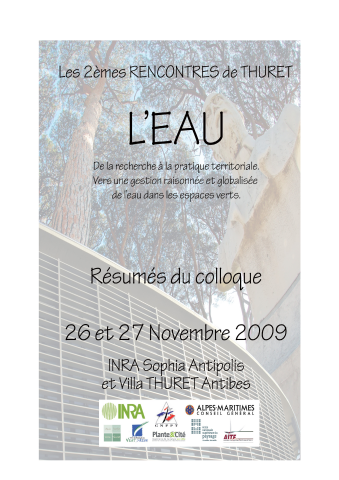
Deuxièmes Rencontres de Thuret
- Type de publi. :
- Date de publi. : 01/11/2009
-
Auteurs :
Gaelle AggeriClaire AtgerPhilippe CrozePierre CruiziatYvette DattéeJohanna DonvezCatherine DucatillionArmelle FaveryCaroline GutlebenYves CaraglioThierry AméglioJean-Pierre RossignolHervé CochardHendrik DaviMaxime CailleretYingge XieMarie NourtierAndré ChanzyOlivier DamasDenis FerrandoThierry ManieOlivier FilippiBernard SeguinJean-Michel MeuriotAnaïs Dusotoit-CoucaudDidier CosteBoris B. AdamAbdelkader BensaoudEnrico FarinaFederico Di BattistaGiovanni RossoAlessandro SoraccoEric GiroudJean-Pierre ClaracVincent BollaClaire AtgerPhilippe Croze
Fiche détaillée
Deuxièmes Rencontres de Thuret
- Type de publi. :
- Date de publi. : 01/11/2009
-
Auteurs :
Gaelle AggeriClaire AtgerPhilippe CrozePierre CruiziatYvette DattéeJohanna DonvezCatherine DucatillionArmelle FaveryCaroline GutlebenYves CaraglioThierry AméglioJean-Pierre RossignolHervé CochardHendrik DaviMaxime CailleretYingge XieMarie NourtierAndré ChanzyOlivier DamasDenis FerrandoThierry ManieOlivier FilippiBernard SeguinJean-Michel MeuriotAnaïs Dusotoit-CoucaudDidier CosteBoris B. AdamAbdelkader BensaoudEnrico FarinaFederico Di BattistaGiovanni RossoAlessandro SoraccoEric GiroudJean-Pierre ClaracVincent BollaClaire AtgerPhilippe Croze
-
Organismes :
Centre National de la Fonction Publique Territoriale
Pousse Conseil
Laboratoire de Parasitologie-Mycologie (CHU de Montpellier)
Institut National de la Recherche Agronomique
Académie d'Agriculture de France
Établissement Public Local d’Enseignement et de Formation Professionnelle Agricole
Villa Thuret
Services déconcentrés d'appui à la recherche Provence-Alpes-Côte d'Azur
Plante et Cité
Cirad Direction Générale
Laboratoire de Physique et Physiologie Intégratives de l’Arbre en environnement Fluctuant
Institut Agro Rennes Angers
Laboratoire de Physique et Physiologie Intégratives de l’Arbre en environnement Fluctuant
Ecologie Systématique et Evolution
Ecologie Systématique et Evolution
Environnement Méditerranéen et Modélisation des Agro-Hydrosystèmes
EPLEFPA
EPLEFPA
Regional Emergencies Observatory, Provence-Alpes-Cote d'Azur region (ORU PACA), Hyères, France.
Pépinière Filippi
Ecologie des forêts de Guyane
Lycee Lafayette
Laboratoire de Physique et Physiologie Intégratives de l'Arbre Fruitier et Forestier
HYDRASOL LE PLESSIS ROBINSON
Unità di Ricerca per la Floricoltura e le Specie Ornamentali (CRA-FSO)
Unità di Ricerca per la Floricoltura e le Specie Ornamentali (CRA-FSO)
Rinnovando
Rinnovando
Fédération Française du Paysage
Ecole Nationale Supérieure du Paysage
Ecole Nationale Supérieure du Paysage
Pousse Conseil
Parc de Lunaret, Ville de Montpellier
Résumé : Comment les plantes utilisent l’eau : rappels sur les mécanismes et les régulations. - Être immobile et subir la sècheresse - Le défi des plantes en zones méditerranéennes et arides. - Les mécanismes de résistance à la sécheresse chez les arbres. - Caractéristiques des sols en milieu urbain. - La reprise racinaire des jeunes plantations d'arbres. - Stress hydrique et dépérissement des sapinières : quels sont les arbres les plus vulnérables ? - Diversification végétale en toitures terrasses avec substrat de faible épaisseur : identification de végétaux adaptés à des conditions limitantes en eau. - Les jardins économes en eau de la ville de Hyères : synthèse des pistes explorées. - Jardins secs en ville : états des lieux et perspectives. - Le changement climatique : quel impact sur les végétaux et l'eau en région méditerranéenne ? - Nouvel exotisme. - PépiPIAF : une nouvelle génération de biocapteurs pour la gestion Précise des besoins en eau des arbres. - La tensiométrie : une technique de gestion durable de l’eau et des moyens d’arrosage de jeunes plantations d’arbres. - Automatisation d'irrigation : capteurs FDR et technologies pour le traitement et la transmission de l'information. - Les démarches entreprises pour économiser l’eau d’arrosage dans les espaces verts de Montpellier. - Pour une gestion environnementale des eaux de pluies. - L’eau recyclée, une opportunité à saisir - L’exemple de l’extension bâtie de St Paul en Forêt (83).
Fichiers liés :
2009_2émes Rencontres de Thuret.pdf
Source
-

Left atrial radiofrequency ablation during mitral valve surgery: a prospective randomized multicentre study (SAFIR).
- Type de publi. : Article dans une revue
- Date de publi. : 01/11/2009
-
Auteurs :
Philippe ChevalierAlain LeizoroviczPablo MaureiraJean-Pierre CarteauxHervé CorbineauThierry CausBrigitte DebreynePhilippe MaboChristian DechillouJean-Claude DeharoSerge BarryPaul TouboulJean-Pierre VillemotJean-François Obadia
Fiche détaillée
Left atrial radiofrequency ablation during mitral valve surgery: a prospective randomized multicentre study (SAFIR).
- Type de publi. : Article dans une revue
- Date de publi. : 01/11/2009
-
Auteurs :
Philippe ChevalierAlain LeizoroviczPablo MaureiraJean-Pierre CarteauxHervé CorbineauThierry CausBrigitte DebreynePhilippe MaboChristian DechillouJean-Claude DeharoSerge BarryPaul TouboulJean-Pierre VillemotJean-François Obadia
-
Organismes :
Service de cardiologie
Evaluation et modélisation des effets thérapeutiques [LBBE]
Service de Cardiologie [CHRU Nancy]
Service de Cardiologie [CHRU Nancy]
Service de chirurgie thoracique cardiaque et vasculaire [Rennes] = Thoracic and Cardiovascular Surgery [Rennes]
Service de chirurgie cardiaque
Service de cardiologie
Service de cardiologie et maladies vasculaires [Rennes] = Cardiac, Thoracic, and Vascular Surgery [Rennes]
Service de Cardiologie [CHRU Nancy]
Service de cardiologie
Service de cardiologie
Service de Cardiologie [CHRU Nancy]
- Publié dans Archives of cardiovascular diseases le 30/10/2020
Résumé : BACKGROUND: Randomized studies evaluating left atrial radiofrequency ablation (RFA) in patients with persistent atrial fibrillation undergoing mitral valve surgery are scarce and monocentric. AIM: To evaluate the efficacy of left atrial RFA concomitant with mitral valve surgery to restore and maintain sinus rhythm. METHODS: The SAFIR is a multicentre, double-blinded, centrally randomized study involving four university hospitals. Between December 2002 and September 2005, 43 patients with mitral valve disease and long-standing, persistent atrial fibrillation (duration>6 months) were included. We compared valvular surgery alone (n=22) or with left atrial RFA (n=21). The main endpoint was sinus rhythm at 12 months without recurrence of arrhythmia during follow-up. Secondary endpoints were surgical adverse events, atrial fibrillation relapses, stroke and echocardiographic measurements after three and 12 months' follow-up. Analyses of the efficacy criteria were performed on an intention-to-treat basis. RESULTS: The primary endpoint occurred significantly more often in the RFA group than in the control group (respectively, 12/21 patients [57%] vs 1/22 patients [4%]; p=0.004). There were more patients with sinus rhythm in the RFA group than in the control group at discharge (72.7% vs 4.8%; p<0.005), 3-month follow-up (85.7% vs 23.8%; p<0.01) and 12-month follow-up (95.2% vs 33.3%; p<0.005). The patients in the RFA group had similar rates of postoperative complications and stroke during follow-up as those in the control group. CONCLUSIONS: This multicentre study suggests that left atrial RFA is effective and safe in patients with chronic atrial fibrillation and mitral valve disease.
Source
-
Ichthyoplankton in the neritic and coastal zone of Antarctica and Subantarctic islands: A review
- Type de publi. : Article dans une revue
- Date de publi. : 01/11/2009
-
Auteurs :
Philippe KoubbiGuy DuhamelJean-Henri HecqCristina BeansChristophe LootsP. PruvostEric TavernierMarino VacchiCarole Vallet
Fiche détaillée
Ichthyoplankton in the neritic and coastal zone of Antarctica and Subantarctic islands: A review
- Type de publi. : Article dans une revue
- Date de publi. : 01/11/2009
-
Auteurs :
Philippe KoubbiGuy DuhamelJean-Henri HecqCristina BeansChristophe LootsP. PruvostEric TavernierMarino VacchiCarole Vallet
-
Organismes :
Biologie des Organismes et Ecosystèmes Aquatiques
Muséum national d'Histoire naturelle
Laboratoire Ressources Halieutiques de Boulogne
Département Milieux et Peuplements Aquatiques
Université Pierre et Marie Curie - Paris 6 - UFR de Médecine Pierre et Marie Curie
Laboratoire d’Océanologie et de Géosciences (LOG) - UMR 8187
- Publié dans Journal of Marine Systems le 25/10/2020
Source
-
{alpha}7 nicotinic acetylcholine receptor regulates airway epithelium differentiation by controlling basal cell proliferation.
- Type de publi. : Article dans une revue
- Date de publi. : 01/11/2009
-
Auteurs :
Kamel MaoucheMyriam C. PoletteThomas JollyKahina MedjberIsabelle Cloëz-TayaraniJean-Pierre ChangeuxHenriette BurletChristine TerrynChristelle CorauxJean-Marie ZahmPhilippe L. BirembautJean-Marie Tournier
Fiche détaillée
{alpha}7 nicotinic acetylcholine receptor regulates airway epithelium differentiation by controlling basal cell proliferation.
- Type de publi. : Article dans une revue
- Date de publi. : 01/11/2009
-
Auteurs :
Kamel MaoucheMyriam C. PoletteThomas JollyKahina MedjberIsabelle Cloëz-TayaraniJean-Pierre ChangeuxHenriette BurletChristine TerrynChristelle CorauxJean-Marie ZahmPhilippe L. BirembautJean-Marie Tournier
-
Organismes :
Plasticité de l'épithélium respiratoire dans les conditions normales et pathologiques - UMR-S 903
Interactions cellules micro-environnement
Plasticité de l'épithélium respiratoire dans les conditions normales et pathologiques - UMR-S 903
Interactions cellules micro-environnement
Plasticité de l'épithélium respiratoire dans les conditions normales et pathologiques - UMR-S 903
Interactions cellules micro-environnement
Plasticité de l'épithélium respiratoire dans les conditions normales et pathologiques - UMR-S 903
Interactions cellules micro-environnement
Département de Neuroscience - Department of Neuroscience
Département de Neuroscience - Department of Neuroscience
Collège de France
Plasticité de l'épithélium respiratoire dans les conditions normales et pathologiques - UMR-S 903
Interactions cellules micro-environnement
Interactions cellules micro-environnement
Plasticité de l'épithélium respiratoire dans les conditions normales et pathologiques - UMR-S 903
Interactions cellules micro-environnement
Plasticité de l'épithélium respiratoire dans les conditions normales et pathologiques - UMR-S 903
Interactions cellules micro-environnement
Plasticité de l'épithélium respiratoire dans les conditions normales et pathologiques - UMR-S 903
Interactions cellules micro-environnement
Plasticité de l'épithélium respiratoire dans les conditions normales et pathologiques - UMR-S 903
Interactions cellules micro-environnement
- Publié dans American Journal of Pathology le 26/10/2020
Résumé : Airway epithelial basal cells are known to be critical for regenerating injured epithelium and maintaining tissue homeostasis. Recent evidence suggests that the alpha7 nicotinic acetylcholine receptor (nAChR), which is highly permeable to Ca(2+), is involved in lung morphogenesis. Here, we have investigated the potential role of the alpha7 nAChR in the regulation of airway epithelial basal cell proliferation and the differentiation of the human airway epithelium. In vivo during fetal development and in vitro during the regeneration of the human airway epithelium, alpha7 nAChR expression coincides with epithelium differentiation. Inactivating alpha7 nAChR function in vitro increases cell proliferation during the initial steps of the epithelium regeneration, leading to epithelial alterations such as basal cell hyperplasia and squamous metaplasia, remodeling observed in many bronchopulmonary diseases. The regeneration of the airway epithelium after injury in alpha7(-/-) mice is delayed and characterized by a transient hyperplasia of basal cells. Moreover, 1-year-old alpha7(-/-) mice more frequently present basal cells hyperplasia. Modulating nAChR function or expression shows that only alpha7 nAChR, as opposed to heteropentameric alpha(x)beta(y) nAChRs, controls the proliferation of human airway epithelial basal cells. These findings suggest that alpha7 nAChR is a key regulator of the plasticity of the human airway epithelium by controlling basal cell proliferation and differentiation pathway and is involved in airway remodeling during bronchopulmonary diseases.
Source
-
A Proposal for Reclassification of the Fuhrman Grading System in Patients with Clear Cell Renal Cell Carcinoma.
- Type de publi. : Article dans une revue
- Date de publi. : 01/11/2009
-
Auteurs :
Maxine SunGiovanni LughezzaniClaudio JeldresHendrik IsbarnShahrokh F ShariatPhilippe ArjaneHugues WidmerDaniel PharandMathieu LatourPaul PerrotteJean-Jacques PatardPierre I. Karakiewicz
Fiche détaillée
A Proposal for Reclassification of the Fuhrman Grading System in Patients with Clear Cell Renal Cell Carcinoma.
- Type de publi. : Article dans une revue
- Date de publi. : 01/11/2009
-
Auteurs :
Maxine SunGiovanni LughezzaniClaudio JeldresHendrik IsbarnShahrokh F ShariatPhilippe ArjaneHugues WidmerDaniel PharandMathieu LatourPaul PerrotteJean-Jacques PatardPierre I. Karakiewicz
-
Organismes :
Cancer Prognostics and Health Outcome Unit
Cancer Prognostics and Health Outcome Unit
Department of Urology
Cancer Prognostics and Health Outcome Unit
Cancer Prognostics and Health Outcome Unit
Cancer Prognostics and Health Outcome Unit
Cancer Prognostics and Health Outcomes Unit
Cancer Prognostics and Health Outcomes Unit
Cancer Prognostics and Health Outcomes Unit
Cancer Prognostics and Health Outcomes Unit
Cancer Prognostics and Health Outcome Unit
Service d'urologie [Rennes] = Urology [Rennes]
Cancer Prognostics and Health Outcome Unit
- Publié dans European Urology le 23/10/2020
Résumé : BACKGROUND: The conventional Fuhrman grading system, which categorizes renal cell carcinoma (RCC) with grades I, II, III, and IV, is the most widely used predictor assessment of RCC cancer-specific mortality (CSM). OBJECTIVES: The aim of this study was to test the prognostic ability of simplified Fuhrman grading schemes (FGSs) that rely on two- or three-tiered classifications. DESIGN, SETTING, AND PARTICIPANTS: The current study addressed a population of 14064 patients with clear cell RCC who were treated with partial or radical nephrectomy between 1988-2004, within nine Surveillance, Epidemiology, and End Results (SEER) cancer registries. MEASUREMENTS: Univariable and multivariable analyses as well as prognostic accuracy analyses were performed for various FGSs to test their ability to predict CSM rates. The conventional four-tiered FGS was compared to a modified two-tiered FGS in which grades I and II and grades III and IV were combined. A second simplified three-tiered FGS in which grades I and II were combined but grades III and IV were kept separate was also tested. RESULTS AND LIMITATIONS: The overall 5-yr CSM-free rate was 81.5%. All three FGSs achieved independent predictor status in multivariable analyses. Prognostic accuracy of multivariable models that relied on various FGSs was 83.6% for the modified two-tiered FGS and 83.8% for both the conventional four-tiered and the modified three-tiered FGS. CONCLUSIONS: Our findings indicate that the simplified FGSs perform equally as well as the conventional four-tiered FGS. The use of simplified grading schemes may represent an advantage for pathologists as well as for clinicians caring for patients with RCC.
Source
-
Door-to-balloon delays before primary angioplasty in the Regional Acute Myocardial Infarction Registry of Brittany. An analysis of the Observatoire Régional Breton sur l'Infarctus du myocarde (ORBI).
- Type de publi. : Article dans une revue
- Date de publi. : 01/11/2009
-
Auteurs :
Guillaume LeurentClaire FougerouPierre-Yves PennecEmmanuelle FilippiBenoît MoquetPhilippe DruellesJean-Philippe HacotAntoine RialanGilles RouaultRenaud GervaisMarc BedossaDominique BoulmierBertrand BoulangerChristian HamonJosiane TreuilIsabelle CoudertHubert CourcouxHervé Le Breton
Fiche détaillée
Door-to-balloon delays before primary angioplasty in the Regional Acute Myocardial Infarction Registry of Brittany. An analysis of the Observatoire Régional Breton sur l'Infarctus du myocarde (ORBI).
- Type de publi. : Article dans une revue
- Date de publi. : 01/11/2009
-
Auteurs :
Guillaume LeurentClaire FougerouPierre-Yves PennecEmmanuelle FilippiBenoît MoquetPhilippe DruellesJean-Philippe HacotAntoine RialanGilles RouaultRenaud GervaisMarc BedossaDominique BoulmierBertrand BoulangerChristian HamonJosiane TreuilIsabelle CoudertHubert CourcouxHervé Le Breton
-
Organismes :
Service de cardiologie et maladies vasculaires [Rennes] = Cardiac, Thoracic, and Vascular Surgery [Rennes]
CIC-IT Rennes
Laboratoire Traitement du Signal et de l'Image
Centre d'Investigation Clinique [Rennes]
Service de cardiologie [Brest]
Service de cardiologie [Vannes]
Centre hospitalier de Saint-Brieuc [Hôpital Yves Le Foll]
Service de cardiologie et maladies vasculaires [Rennes] = Cardiac, Thoracic, and Vascular Surgery [Rennes]
CIC-IT Rennes
Laboratoire Traitement du Signal et de l'Image
Service de cardiologie et maladies vasculaires [Rennes] = Cardiac, Thoracic, and Vascular Surgery [Rennes]
CIC-IT Rennes
Laboratoire Traitement du Signal et de l'Image
Service de cardiologie et maladies vasculaires [Rennes] = Cardiac, Thoracic, and Vascular Surgery [Rennes]
CIC-IT Rennes
Laboratoire Traitement du Signal et de l'Image
Service des urgences [Rennes] = Emergency [Rennes]
Service des urgences [Rennes] = Emergency [Rennes]
Service de cardiologie et maladies vasculaires [Rennes] = Cardiac, Thoracic, and Vascular Surgery [Rennes]
CIC-IT Rennes
Laboratoire Traitement du Signal et de l'Image
- Publié dans Archives of cardiovascular diseases le 30/10/2020
Résumé : BACKGROUND: Minimizing delays to coronary reperfusion is critical in the management of acute myocardial infarction (AMI). AIMS: To determine delays in in-hospital management and factors associated with delays of over 45min. METHODS: We analysed data from the Observatoire Régional Breton sur l'Infarctus, a registry of AMI patients admitted within 24h of symptom onset (July 2007 to December 2008) to an interventional cardiology centre in Brittany. Prehospital delay was defined as time between first responder arrival at the patient and patient arrival at an interventional cardiovascular centre. In-hospital delay was defined as time between admission to the interventional cardiovascular centre and first balloon inflation. Patients were grouped according to duration of in-hospital delay (>45 vs
Source
-
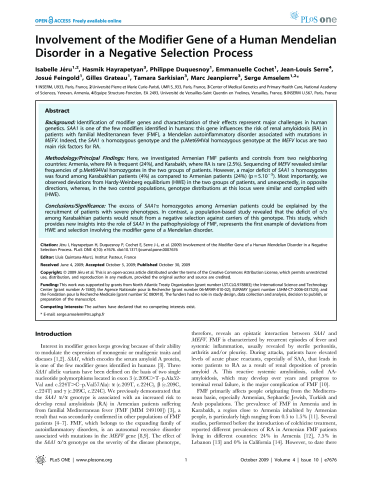
Involvement of the Modifier Gene of a Human Mendelian Disorder in a Negative Selection Process
- Type de publi. : Article dans une revue
- Date de publi. : 30/10/2009
-
Auteurs :
Isabelle JéruHasmik HayrapetyanPhilippe DuquesnoyEmmanuelle CochetJean-Louis SerreJosué FeingoldGilles GrateauTamara SarkisianMarc JeanpierreSerge Amselem
Fiche détaillée
Involvement of the Modifier Gene of a Human Mendelian Disorder in a Negative Selection Process
- Type de publi. : Article dans une revue
- Date de publi. : 30/10/2009
-
Auteurs :
Isabelle JéruHasmik HayrapetyanPhilippe DuquesnoyEmmanuelle CochetJean-Louis SerreJosué FeingoldGilles GrateauTamara SarkisianMarc JeanpierreSerge Amselem
-
Organismes :
Physiopathologie des maladies génétiques d'expression pédiatrique
CHU Trousseau [APHP]
National Academy of Sciences of the Republic of Armenia [Yerevan]
Physiopathologie des maladies génétiques d'expression pédiatrique
Physiopathologie des maladies génétiques d'expression pédiatrique
Unité de pathologie cellulaire et génétique
Physiopathologie des maladies génétiques d'expression pédiatrique
Physiopathologie des maladies génétiques d'expression pédiatrique
National Academy of Sciences of the Republic of Armenia [Yerevan]
National Academy of Sciences of the Republic of Armenia [Yerevan]
Physiopathologie des maladies génétiques d'expression pédiatrique
CHU Trousseau [APHP]
- Publié dans PLoS ONE le 25/10/2020
Résumé : Background: Identification of modifier genes and characterization of their effects represent major challenges in human genetics. SAA1 is one of the few modifiers identified in humans: this gene influences the risk of renal amyloidosis (RA) in patients with familial Mediterranean fever (FMF), a Mendelian autoinflammatory disorder associated with mutations in MEFV. Indeed, the SAA1 alpha homozygous genotype and the p.Met694Val homozygous genotype at the MEFV locus are two main risk factors for RA. Methodology/principal findings: HERE, WE INVESTIGATED ARMENIAN FMF PATIENTS AND CONTROLS FROM TWO NEIGHBORING COUNTRIES: Armenia, where RA is frequent (24%), and Karabakh, where RA is rare (2.5%). Sequencing of MEFV revealed similar frequencies of p.Met694Val homozygotes in the two groups of patients. However, a major deficit of SAA1 alpha homozygotes was found among Karabakhian patients (4%) as compared to Armenian patients (24%) (p = 5.10(-5)). Most importantly, we observed deviations from Hardy-Weinberg equilibrium (HWE) in the two groups of patients, and unexpectedly, in opposite directions, whereas, in the two control populations, genotype distributions at this locus were similar and complied with (HWE). Conclusions/significance: The excess of SAA1alpha homozygotes among Armenian patients could be explained by the recruitment of patients with severe phenotypes. In contrast, a population-based study revealed that the deficit of alpha/alpha among Karabakhian patients would result from a negative selection against carriers of this genotype. This study, which provides new insights into the role of SAA1 in the pathophysiology of FMF, represents the first example of deviations from HWE and selection involving the modifier gene of a Mendelian disorder.
Fichiers liés :
PlosOne2009Vol4_Jeru.pdf
Source
-
Object Memory in Young and Aged Mice after Sevoflurane Anaesthesia.
- Type de publi. : Article dans une revue
- Date de publi. : 28/10/2009
-
Auteurs :
Andreas WiklundSylvie GranonPhilippe FaureEva SundmanJean-Pierre ChangeuxLars I. Eriksson
Fiche détaillée
Object Memory in Young and Aged Mice after Sevoflurane Anaesthesia.
- Type de publi. : Article dans une revue
- Date de publi. : 28/10/2009
-
Auteurs :
Andreas WiklundSylvie GranonPhilippe FaureEva SundmanJean-Pierre ChangeuxLars I. Eriksson
-
Organismes :
Department of Anaesthesiology, Surgical Services and Intensive Care Medicine, Karolinska University Hospital
Department of Physiology and Pharmacology, Section for Anaesthesiology and Intensive Care Medicine, Karolinska Institutet
Neurobiologie Intégrative des Systèmes Cholinergiques
Neurobiologie Intégrative des Systèmes Cholinergiques
Department of Physiology and Pharmacology, Section for Anaesthesiology and Intensive Care Medicine, Karolinska Institutet
Department of Anaesthesiology, Surgical Services and Intensive Care Medicine, Karolinska University Hospital
Collège de France
Department of Physiology and Pharmacology, Section for Anaesthesiology and Intensive Care Medicine, Karolinska Institutet
Department of Anaesthesiology, Surgical Services and Intensive Care Medicine, Karolinska University Hospital
- Publié dans NeuroReport le 01/11/2020
Résumé : Learning and memory are cognitive functions commonly impaired after surgery, especially in elderly patients. Our aim was to evaluate the effect of sevoflurane anaesthesia on episodic-like memory in young and aged wild-type mice and mice with altered nicotinic cholinergic neurotransmission (beta2KO). Mice learned objects before randomization to control, anaesthesia or sham groups. Anaesthesia was maintained at 2.6% sevoflurane for 2 h, starting immediately after training. Object memory testing was performed after 24 h, when one familiar object was replaced by a nonfamiliar object. While nonanaesthetized mice showed memory retention of the familiar object, anaesthetized wild-type and beta2KO mice showed impaired memory. Sevoflurane anaesthesia thus causes memory impairment in mice regardless of beta2 receptor-mediated nicotinic cholinergic neurotransmission.
Source
-

δ13C measurements to monitor the water status of grapevine
- Type de publi. : Communication dans un congrès
- Date de publi. : 27/10/2009
-
Auteurs :
Cornelis van LeeuwenOlivier TregoatDavid PernetJean Philippe RobyCéline CelliéJean-Pierre J.-P. Gaudillere
Fiche détaillée
δ13C measurements to monitor the water status of grapevine
- Type de publi. : Communication dans un congrès
- Date de publi. : 27/10/2009
-
Auteurs :
Cornelis van LeeuwenOlivier TregoatDavid PernetJean Philippe RobyCéline CelliéJean-Pierre J.-P. Gaudillere
-
Organismes :
Ecophysiologie et Génomique Fonctionnelle de la Vigne
Viti Development
Ecophysiologie et Génomique Fonctionnelle de la Vigne
Chambre d'Agriculture de l'Hérault
Œnologie
Fichiers liés :
COST858bookofabstract(1)_1.pdf
Source
-
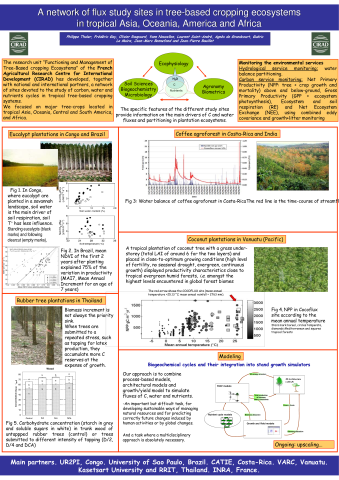
A network of flux study sites in tree-based cropping ecosystems in tropical Asia, Oceania, America and Africa
- Type de publi. :
- Date de publi. : 26/10/2009
-
Auteurs :
Philippe ThalerFrédéric GayOlivier RoupsardYann NouvellonLaurent Saint‐andréAgnès de GrandcourtGuerric Le MaireJean-Marc J.-M. BonnefondJean-Pierre Bouillet
Fiche détaillée
A network of flux study sites in tree-based cropping ecosystems in tropical Asia, Oceania, America and Africa
- Type de publi. :
- Date de publi. : 26/10/2009
-
Auteurs :
Philippe ThalerFrédéric GayOlivier RoupsardYann NouvellonLaurent Saint‐andréAgnès de GrandcourtGuerric Le MaireJean-Marc J.-M. BonnefondJean-Pierre Bouillet
-
Organismes :
Centre de Coopération Internationale en Recherche Agronomique pour le Développement
Centre de Coopération Internationale en Recherche Agronomique pour le Développement
Centre de Coopération Internationale en Recherche Agronomique pour le Développement
Centre de Coopération Internationale en Recherche Agronomique pour le Développement
Centre de Coopération Internationale en Recherche Agronomique pour le Développement
Centre de Coopération Internationale en Recherche Agronomique pour le Développement
Centre de Coopération Internationale en Recherche Agronomique pour le Développement
Écologie fonctionnelle et physique de l'environnement
Centre de Coopération Internationale en Recherche Agronomique pour le Développement
Fichiers liés :
PROD20105a5427bd_20100727040405266_1.pdf
Source