Professeur des universités en sciences de gestion
-

Successful thrombectomy is beneficial in patients with pre-stroke disability: Results from an international multicenter cohort study
- Type de publi. : Article dans une revue
- Date de publi. : 01/02/2023
-
Auteurs :
Célina DucrouxLaurent DerexMikaïl NourredineJulie HaesebaertMarielle BuissonWalid AlesefirW. BoisseauNicole DaneaultYan DeschaintreJose Danilo B. DiestroOmer EkerJohanna EnelingLaura GioiaDaniella IancuGrégory JacquinCéline OdierChristian StapfJean RaymondD. RoyA. WeillBertrand LapergueAlexandre PoppeMichel PiotinRaphael BlancHocine Redjem Simon EscalardJean-Philippe DesillesFrançois DelvoyeStanislas SmajdaBenjamin MaierSolène HebertMikael MazighiMikael ObadiaCandice SabbenPierre SenersIgor RaynouardOvide CorabianuThomas de BrouckerEric ManchonGuillaume TaylorMalek Ben MaachaLaurie-Anne ThionAugustin LeclerJulien SavatovskyAdrien WangSerge EvrardMaya TchikviladzeNadia AjiliBertrand LapergueDavid Weisenburger-LileLucas GorzaGéraldine BuardOguzhan CoskunArturo ConsoliFederico Di MariaGeorges RodeshSergio ZimatoreMorgan LeguenJulie GratieuxFernando PicoHaja RakotoharinandrasanaPhilippe TassanRoxanna PollSylvie MarinierNorbert NighoghossianRoberto RivaOmer EkerFrancis TurjmanLaurent DerexTae-Hee ChoLaura MechtouffAnne-Claire LukaszewiczFrédéric PhilippeauSerkan CakmakKarine Blanc-LasserreAnne-Evelyne ValletGaultier MarnatFlorent GarielXavier BarreauJérôme BergePatrice MenegonIgor SibonLudovic LucasStéphane OlindoPauline RenouSharmila SagnierMathilde PoliSabrina DebruxellesFrançois RouanetThomas TourdiasJean-Sebastien LiegeyPierre BriauNicolas PangonRomain BourcierLili DétrazBenjamin Daumas-DuportPierre-Louis AlexandreMonica RoyCédric LenobleHubert DesalBenoît GuillonSolène de GaalonCécile PreterreBenjamin GorySerge BracardRené AnxionnatMarc BraunAnne-Laure DerelleRomain TonneletLiang LiaoFrançois ZhuEmmanuelle SchmittSophie PlanelSébastien RichardLisa HumbertjeanGioia MioneJean-Christophe LacourNolwenn Riou-ComteGérard AudibertMarcela VoicuIonel AlbMarie ReitterMadalina BrezeanuAgnès MassonAdriana TabarnaIona PodarFrancisco Macian-MontoroSuzanna SalemeCharbel MounayerAymeric RouchaudVincent CostalatCaroline ArquizanCyril DargazanliGrégory GascouPierre-Henri LefèvreImad DerrazCarlos RiquelmeNicolas GaillardIsabelle MourandLucas CortiFederico CagnazzoAdrien ter SchiphorstEugene FrancoisStéphane VannierJean-Christophe FerreHelene RaoultThomas RonziereMaria LassaleChristophe PayaJean-Yves GauvritClément TracolSophie Langnier-LemercierYves SamsonCharlotte RossoAnne LegerSandrine DeltourFrédéric ClarençonEimad ShotarLaurent SpelleChristian DenierOlivier ChassinVanessa ChalumeauJildaz CaroffOlivier ChassinLaura VendittiOlivier NaggaraWagih Ben HassenGrégoire BoulouisChristine Rodriguez-RégentDenis TrystramBasile KerlerouxGuillaume TurcValérie DomigoCatherine LamyJulia BirchenallClothilde IsabelFrançois LunAlain ViguierChristophe CognardAnne Christine JanuelJean-Marc OlivotNicolas RaposoFabrice BonnevilleJean François AlbucherLionel CalviereJean DarcourtPhilippe TallGuillaume BellangerLouis FontaineEmmanuel TouzeCharlotte BarbierRomain SchneckenburgerMarion BoulangerJulien CogezSophie GuettierSerge TimsitJean-Christophe GentricJulien OgnardFrancois Mathias MerrienOzlem Ozkul WermesterEvelyne MassardierChrysanthi PapagiannakiFrédéric BourdainPatricia BernadyLaurent Lagoarde-SegotHélène CailliezLouis VeunacDavid HigueValérie WolffRaoul PopRémi BeaujeuxMihoc Dan-SorinMonica ManisorAnthony Le BrasSarah EvainArnaud Le GuenSebastian RichterRegis HubrechtStéphanie DemaslesBruno BarrosoDenis SablotGeoffroy FarouilMaxime TardieuPhilippe SmadjaSabine AptelIan Seiler
Fiche détaillée
Successful thrombectomy is beneficial in patients with pre-stroke disability: Results from an international multicenter cohort study
- Type de publi. : Article dans une revue
- Date de publi. : 01/02/2023
-
Auteurs :
Célina DucrouxLaurent DerexMikaïl NourredineJulie HaesebaertMarielle BuissonWalid AlesefirW. BoisseauNicole DaneaultYan DeschaintreJose Danilo B. DiestroOmer EkerJohanna EnelingLaura GioiaDaniella IancuGrégory JacquinCéline OdierChristian StapfJean RaymondD. RoyA. WeillBertrand LapergueAlexandre PoppeMichel PiotinRaphael BlancHocine Redjem Simon EscalardJean-Philippe DesillesFrançois DelvoyeStanislas SmajdaBenjamin MaierSolène HebertMikael MazighiMikael ObadiaCandice SabbenPierre SenersIgor RaynouardOvide CorabianuThomas de BrouckerEric ManchonGuillaume TaylorMalek Ben MaachaLaurie-Anne ThionAugustin LeclerJulien SavatovskyAdrien WangSerge EvrardMaya TchikviladzeNadia AjiliBertrand LapergueDavid Weisenburger-LileLucas GorzaGéraldine BuardOguzhan CoskunArturo ConsoliFederico Di MariaGeorges RodeshSergio ZimatoreMorgan LeguenJulie GratieuxFernando PicoHaja RakotoharinandrasanaPhilippe TassanRoxanna PollSylvie MarinierNorbert NighoghossianRoberto RivaOmer EkerFrancis TurjmanLaurent DerexTae-Hee ChoLaura MechtouffAnne-Claire LukaszewiczFrédéric PhilippeauSerkan CakmakKarine Blanc-LasserreAnne-Evelyne ValletGaultier MarnatFlorent GarielXavier BarreauJérôme BergePatrice MenegonIgor SibonLudovic LucasStéphane OlindoPauline RenouSharmila SagnierMathilde PoliSabrina DebruxellesFrançois RouanetThomas TourdiasJean-Sebastien LiegeyPierre BriauNicolas PangonRomain BourcierLili DétrazBenjamin Daumas-DuportPierre-Louis AlexandreMonica RoyCédric LenobleHubert DesalBenoît GuillonSolène de GaalonCécile PreterreBenjamin GorySerge BracardRené AnxionnatMarc BraunAnne-Laure DerelleRomain TonneletLiang LiaoFrançois ZhuEmmanuelle SchmittSophie PlanelSébastien RichardLisa HumbertjeanGioia MioneJean-Christophe LacourNolwenn Riou-ComteGérard AudibertMarcela VoicuIonel AlbMarie ReitterMadalina BrezeanuAgnès MassonAdriana TabarnaIona PodarFrancisco Macian-MontoroSuzanna SalemeCharbel MounayerAymeric RouchaudVincent CostalatCaroline ArquizanCyril DargazanliGrégory GascouPierre-Henri LefèvreImad DerrazCarlos RiquelmeNicolas GaillardIsabelle MourandLucas CortiFederico CagnazzoAdrien ter SchiphorstEugene FrancoisStéphane VannierJean-Christophe FerreHelene RaoultThomas RonziereMaria LassaleChristophe PayaJean-Yves GauvritClément TracolSophie Langnier-LemercierYves SamsonCharlotte RossoAnne LegerSandrine DeltourFrédéric ClarençonEimad ShotarLaurent SpelleChristian DenierOlivier ChassinVanessa ChalumeauJildaz CaroffOlivier ChassinLaura VendittiOlivier NaggaraWagih Ben HassenGrégoire BoulouisChristine Rodriguez-RégentDenis TrystramBasile KerlerouxGuillaume TurcValérie DomigoCatherine LamyJulia BirchenallClothilde IsabelFrançois LunAlain ViguierChristophe CognardAnne Christine JanuelJean-Marc OlivotNicolas RaposoFabrice BonnevilleJean François AlbucherLionel CalviereJean DarcourtPhilippe TallGuillaume BellangerLouis FontaineEmmanuel TouzeCharlotte BarbierRomain SchneckenburgerMarion BoulangerJulien CogezSophie GuettierSerge TimsitJean-Christophe GentricJulien OgnardFrancois Mathias MerrienOzlem Ozkul WermesterEvelyne MassardierChrysanthi PapagiannakiFrédéric BourdainPatricia BernadyLaurent Lagoarde-SegotHélène CailliezLouis VeunacDavid HigueValérie WolffRaoul PopRémi BeaujeuxMihoc Dan-SorinMonica ManisorAnthony Le BrasSarah EvainArnaud Le GuenSebastian RichterRegis HubrechtStéphanie DemaslesBruno BarrosoDenis SablotGeoffroy FarouilMaxime TardieuPhilippe SmadjaSabine AptelIan Seiler
-
Organismes :
Université de Montréal
Research on Healthcare Performance
Hôpital neurologique et neurochirurgical Pierre Wertheimer [CHU - HCL]
Service Hospitalo-Universitaire de Pharmaco-Toxicologie [Bron]
Service Hospitalo-Universitaire de Pharmaco-Toxicologie [Bron]
Centre d’Investigation Clinique de Lyon [Bron]
Université de Montréal
Centre Hospitalier de l'Université de Montréal
Centre Hospitalier de l'Université de Montréal
Centre Hospitalier de l'Université de Montréal
Centre Hospitalier de l'Université de Montréal
Centre de Recherche en Acquisition et Traitement de l'Image pour la Santé
Modeling & analysis for medical imaging and Diagnosis
Centre Hospitalier de l'Université de Montréal
Centre Hospitalier de l'Université de Montréal
Centre Hospitalier de l'Université de Montréal
Centre Hospitalier de l'Université de Montréal
Centre Hospitalier de l'Université de Montréal
Centre Hospitalier de l'Université de Montréal
Centre Hospitalier de l'Université de Montréal
Centre Hospitalier de l'Université de Montréal
Centre Hospitalier de l'Université de Montréal
Hôpital Foch [Suresnes]
- Publié dans Journal de Neuroradiologie / Journal of Neuroradiology le 26/10/2020
Résumé : Background: Patients with pre-stroke disability, defined as a modified Rankin Scale (mRS) ≥3, were excluded from most trials of endovascular thrombectomy (EVT) for acute stroke. We sought to evaluate the prognostic factors associated with favorable outcome in stroke patients with known disability undergoing EVT, and the impact of successful reperfusion. Methods: Consecutive acute stroke patients with pre-stroke disability, undergoing EVT, were retrospectively collected between 2016 to 2019 from a Canadian cohort and a multicenter French cohort (Endovascular Treatment in Ischemic Stroke registry-ETIS). Favorable outcome was defined as an mRS equal to pre-stroke mRS. Patients achieving successful reperfusion (defined as a modified Thrombolysis in Cerebral Infarction score of 2b/3) were compared with patients without successful reperfusion to determine if successful EVT was associated with better functional outcomes. Results: Among 6220 patients treated with EVT, 280 (4.5%) patients with a pre-stroke mRS ≥3 were included. Sixty-one patients (21.8%) had a favorable outcome and 146 (52.1%) died at 3 months. Patients with successful reperfusion had a higher proportion of favorable 90-day mRS (27.6% versus 19.6%, p = 0.025) and a lower mortality (48.3% versus 69.6%, p = 0.008) than patients without successful reperfusion. After adjusting for baseline prognostic factors, successful reperfusion defined by TICI ≥2b was associated with favorable functional outcome (OR 3.16 CI95% [1.11-11.5]; p 0.048). Conclusion: In patients with pre-stroke disability, successful reperfusion is associated with a greater proportion of favorable outcome and lower mortality.
Source
-
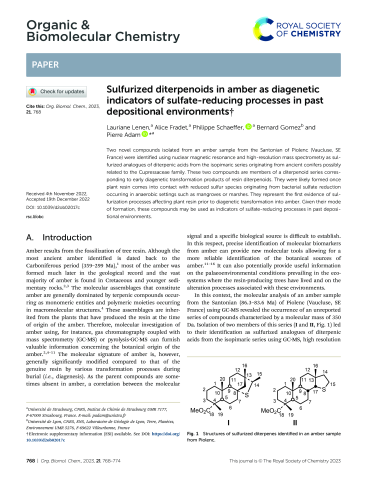
Sulfurized diterpenoids in amber as diagenetic indicators of sulfate-reducing processes in past depositional environments
- Type de publi. : Article dans une revue
- Date de publi. : 25/01/2023
-
Auteurs :
Lauriane LenenAlice FradetP. SchaefferBernard GomezP. Adam
Fiche détaillée
Sulfurized diterpenoids in amber as diagenetic indicators of sulfate-reducing processes in past depositional environments
- Type de publi. : Article dans une revue
- Date de publi. : 25/01/2023
-
Auteurs :
Lauriane LenenAlice FradetP. SchaefferBernard GomezP. Adam
-
Organismes :
Institut de Chimie de Strasbourg
Institut de Chimie de Strasbourg
Institut de Chimie de Strasbourg
Laboratoire de Géologie de Lyon - Terre, Planètes, Environnement
Institut de Chimie de Strasbourg
- Publié dans Organic & Biomolecular Chemistry le 02/11/2020
Résumé : Two novel compounds isolated from an amber sample from the Santonian of Piolenc (Vaucluse, SE France) were identified using nuclear magnetic resonance and high-resolution mass spectrometry as sulfurized analogues of diterpenic acids from the isopimaric series originating from ancient conifers possibly related to the Cupressaceae family. These two compounds are members of a diterpenoid series corresponding to early diagenetic transformation products of resin diterpenoids. They were likely formed once plant resin comes into contact with reduced sulfur species originating from bacterial sulfate reduction occurring in anaerobic settings such as mangroves or marshes. They represent the first evidence of sulfurization processes affecting plant resin prior to diagenetic transformation into amber. Given their mode of formation, these compounds may be used as indicators of sulfate-reducing processes in past depositional environments.
Fichiers liés :
Lenen et al., 2023 + Suppl Info.pdf
Source
-
Performance of creatinine-based equations to estimate glomerular filtration rate in White and Black populations in Europe, Brazil and Africa
- Type de publi. : Article dans une revue
- Date de publi. : 23/01/2023
-
Auteurs :
Pierre DelanayeEmmanuelle Vidal-PetiotJonas BjörkNatalie EbertBjörn O EriksenLaurence DubourgAnders GrubbMagnus HanssonKarin LittmannChristophe MariatToralf MelsomElke SchaeffnerPer-Ola SundinArend BökenkampUlla B BergKajsa Åsling-MonemiAnna ÅkessonAnders LarssonEtienne CavalierR Neil DaltonMarie CourbebaisseLionel CouziFrançois GaillardCyril GarrousteLola JacquemontNassim KamarChristophe LegendreLionel RostaingThomas StehléJean-Philippe HaymannLuciano da Silva SelistreJorge P Strogoff-De-MatosJustine B BukabauErnest K SumailiEric YayoDagui MonnetUlf NymanHans PottelMartin Flamant
Fiche détaillée
Performance of creatinine-based equations to estimate glomerular filtration rate in White and Black populations in Europe, Brazil and Africa
- Type de publi. : Article dans une revue
- Date de publi. : 23/01/2023
-
Auteurs :
Pierre DelanayeEmmanuelle Vidal-PetiotJonas BjörkNatalie EbertBjörn O EriksenLaurence DubourgAnders GrubbMagnus HanssonKarin LittmannChristophe MariatToralf MelsomElke SchaeffnerPer-Ola SundinArend BökenkampUlla B BergKajsa Åsling-MonemiAnna ÅkessonAnders LarssonEtienne CavalierR Neil DaltonMarie CourbebaisseLionel CouziFrançois GaillardCyril GarrousteLola JacquemontNassim KamarChristophe LegendreLionel RostaingThomas StehléJean-Philippe HaymannLuciano da Silva SelistreJorge P Strogoff-De-MatosJustine B BukabauErnest K SumailiEric YayoDagui MonnetUlf NymanHans PottelMartin Flamant
-
Organismes :
Centre Hospitalier Universitaire Sart Tilman
Hôpital Universitaire Carémeau [Nîmes]
CIC Hôpital Bichat
Skane University Hospital [Lund]
Charité - UniversitätsMedizin = Berlin University Medicine
The Arctic University of Norway [Tromsø, Norway]
Hôpital Edouard Herriot [CHU - HCL]
Skane University Hospital [Lund]
Karolinska University Hospital [Stockholm]
Karolinska University Hospital [Stockholm]
Centre Hospitalier Universitaire de Saint-Etienne [CHU Saint-Etienne]
The Arctic University of Norway [Tromsø, Norway]
Charité - UniversitätsMedizin = Berlin University Medicine
Örebro University Hospital [Örebro, Sweden]
Emma Children’s Hospital
Karolinska University Hospital [Stockholm]
Karolinska University Hospital [Stockholm]
Skane University Hospital [Lund]
Uppsala University Hospital
Centre Hospitalier Universitaire Sart Tilman
Evelina London Children's Hospital
Hôpital Européen Georges Pompidou [APHP]
Immunology from Concept and Experiments to Translation = Immunologie Conceptuelle, Expérimentale et Translationnelle
Hôpital Edouard Herriot [CHU - HCL]
CHU Clermont-Ferrand
Centre Hospitalier Universitaire de Nantes = Nantes University Hospital
Département de Néphrologie et Transplantation d'organes [CHU Toulouse]
Hôpital Necker - Enfants Malades [AP-HP]
Hôpital Michallon
Institut Mondor de Recherche Biomédicale
CHU Henri Mondor [Créteil]
CHU Tenon [AP-HP]
Universidade de Caxias do Sul [Rio Grande do Sul, Brasil] = University of Caxias do Sul [Rio Grande do Sul, Brazil] = Université de Caxias do Sul [Rio Grande do Sul, Brésil]
Universidade Federal Fluminense [Rio de Janeiro]
University of Kinshasa
University of Kinshasa
Université Félix Houphouët-Boigny [Abidjan, Côte d'Ivoire]
Université Félix Houphouët-Boigny [Abidjan, Côte d'Ivoire]
Lund University
Technologie campus Gent - KU Leuven
CIC Hôpital Bichat
- Publié dans Nephrology Dialysis Transplantation le 01/11/2020
Résumé : Background. A new Chronic Kidney Disease Epidemiology Collaboration equation without the race variable has been recently proposed (CKD-EPIAS). This equation has neither been validated outside USA nor compared with the new European Kidney Function Consortium (EKFC) and Lund-Malmö Revised (LMREV) equations, developed in European cohorts. Methods. Standardized creatinine and measured glomerular filtration rate (GFR) from the European EKFC cohorts (n=13 856 including 6 031 individuals in the external validation cohort), from France (n=4 429, including 964 Black Europeans), from Brazil (n=100) and from Africa (n=508) were used to test the performances of the equations. A matched analysis between White Europeans and Black Africans or Black Europeans was performed. Results. In White Europeans (n=9 496), both the EKFC and LMREV equations outperformed CKD-EPIAS (bias of –0.6 and –3.2, respectively versus 5.0 mL/min/1.73 m², and accuracy within 30% of 86.9 and 87.4, respectively, versus 80.9%). In Black Europeans and Black Africans, the best performance was observed with the EKFC equation using a specific Q-value (= concentration of serum creatinine in healthy males and females). These results were confirmed in matched analyses, which showed that serum creatinine concentrations were different in White Europeans, Black Europeans and Black Africans for the same measured GFR, age, sex and body mass index. Creatinine differences were more relevant in males. Conclusion. In a European and African cohort, the performances of CKD-EPIAS remain suboptimal. The EKFC equation, using usual or dedicated population-specific Q-values, presents the best performance in the whole age range in the European and African populations included in this study.
Source
-

A Solve-RD ClinVar-based reanalysis of 1522 index cases from ERN-ITHACA reveals common pitfalls and misinterpretations in exome sequencing
- Type de publi. : Article dans une revue
- Date de publi. : 20/01/2023
-
Auteurs :
Anne-Sophie Denommé-PichonLeslie MatalongaElke de BoerAdam JacksonElisa BenettiSiddharth BankaAnge-Line BruelAndrea CiolfiJill Clayton-SmithBruno DallapiccolaYannis DuffourdKornelia EllwangerChiara FalleriniChristian GilissenHolm GraessnerTobias B HaackMarketa HavlovicovaAlexander HoischenNolwenn Jean-MarçaisTjitske KleefstraEstrella López-MartínMilan MacekMaria Antonietta MencarelliSébastien MouttonRolph PfundtSimone PizziManuel PosadaFrancesca Clementina RadioAlessandra RenieriCaroline RooryckLukas RybaHana SafraouMartin SchwarzMarco TartagliaChristel Thauvin-RobinetJulien ThevenonFrédéric Tran Mau-ThemAurélien TrimouillePavel VotypkaBert B A de VriesMarjolein H WillemsenBirte ZurekAlain VerloesChristophe PhilippeKristin M AbbottSiddharth BankaElke de BoerAndrea CiolfiJill Clayton-SmithBruno DallapiccolaAnne-Sophie Denommé-PichonLaurence FaivreChristian GilissenTobias B HaackMarketa HavlovicovaAlexander HoischenAdam JacksonMieke KerstjensTjitske KleefstraEstrella López MartínMilan MacekLeslie MatalongaIsabelle MaystadtManuela MorleoVicenzo NigroMichele PinelliSimone PizziManuel PosadaFrancesca C RadioAlessandra RenieriOlaf RiessCaroline RooryckLukas RybaJean-Madeleine de Sainte AgatheGijs W E SantenMartin SchwarzMarco TartagliaChristel ThauvinAnnalaura TorellaAurélien TrimouilleAlain VerloesLisenka E L M VissersAntonio VitobelloPavel VotypkaKristina ZguroElke De BoerEnzo CohenDaniel DanisAnne-Sophie Denommé-PichonFei GaoChristian GilissenRita HorvathMridul JohariLennart JohansonShuang LiLeslie MatalongaHeba MorsyIsabelle NelsonIda ParamonovIris B a W Te PaskePeter RobinsonMarco SavareseWouter SteyaertAna TöpfAurélien TrimouilleJoeri K van der VeldeJana VandrovcovaAntonio VitobelloOlaf RiessTobias B HaackHolm GraessnerBirte ZurekKornelia EllwangerStephan OssowskiGerman DemidovMarc SturmJulia M Schulze-HentrichRebecca SchüleJishu XuChristoph KesslerMelanie WayandMatthis SynofzikCarlo WilkeAndreas TraschützLudger SchölsHolger HengelHolger LercheJosua KegelePeter HeutinkHan BrunnerHans SchefferNicoline HoogerbruggeAlexander HoischenLisenka E L M VissersChristian GilissenWouter SteyaertKarolis SablauskasRicharda M de VoerErik-Jan KamsteegBart van de WarrenburgNienke van OsIris Te PaskeErik JanssenElke de BoerMarloes SteehouwerBurcu YaldizTjitske KleefstraAnthony J BrookesColin VealSpencer GibsonVatsalya MaddiMehdi MehtarizadehUmar RiazGreg WarrenFarid Yavari DizjikanThomas ShorterAna TöpfVolker StraubChiara Marini BettoloJordi Diaz ManeraSophie HambletonKarin EngelhardtJill Clayton-SmithSiddharth BankaElizabeth AlexanderAdam JacksonLaurence FaivreChristel ThauvinAntonio VitobelloAnne-Sophie Denommé-PichonYannis DuffourdAnge-Line BruelChristine PeyronAurore PélissierSergi BeltranIvo Glynne GutSteven LaurieDavide PisciaLeslie MatalongaAnastasios PapakonstantinouGemma BullichAlberto CorvoMarcos Fernandez-CallejoCarles HernándezDaniel PicóIda ParamonovHanns LochmüllerGulcin GumusVirginie Bros-FacerAna RathMarc HanauerDavid LagorceOscar HongnatMaroua ChahdilEmeline LebretonGiovanni StevaninAlexandra DurrClaire-Sophie DavoineLéna Guillot-NoelAnna HeinzmannGiulia CoarelliGisèle BonneTeresinha EvangelistaAllamand VIsabelle NelsonRabah Ben YaouCorinne MétayBruno EymardEnzo CohenAntonio AtalaiaTanya StojkovicMilan MacekMarek TurnovecDana ThomasováRadka Pourová KremlikováVera FrankováMarkéta HavlovicováPetra LiškováPavla DoležalováHelen ParkinsonThomas KeaneMallory FreebergColine ThomasDylan SpaldingPeter RobinsonDaniel DanisGlenn RobertAlessia CostaChristine PatchMike HannaHenry HouldenMary ReillyJana VandrovcovaStephanie EfthymiouHeba MorsyElisa CaliFrancesca MagrinelliSanjay M SisodiyaJonathan RohrerFrancesco MuntoniIrina ZaharievaAnna SarkozyVincent TimmermanJonathan BaetsGeert de VriesJonathan de WinterDanique BeijerPeter de JongheLiedewei van de VondelWillem de RidderSarah WeckhuysenVincenzo NigroMargherita MutarelliManuela MorleoMichele PinelliAlessandra VaravalloSandro BanfiAnnalaura TorellaFrancesco MusacchiaGiulio PilusoAlessandra FerliniRita SelvaticiFrancesca GualandiStefania BigoniRachele RossiMarcella NeriStefan AretzIsabel SpierAnna Katharina SommerSophia PetersCarla OliveiraJose Garcia PelaezAna Rita MatosCelina São JoséMarta FerreiraIrene GulloSusana C.M. FernandesLuzia GarridoPedro FerreiraFátima CarneiroMorris A SwertzLennart JohanssonJoeri K van der VeldeGerben van der VriesPieter B NeerincxDavid RuvoloKristin M AbbottWilhemina S Kerstjens FrederikseEveline Zonneveld-HuijssoonDieuwke Roelofs-PrinsMarielle van GijnSebastian KöhlerAlison MetcalfeAlain VerloesSéverine DrunatDelphine HéronCyril MignotBoris KerenJean-Madeleine de Sainte AgatheCaroline RooryckDidier LacombeAurélien TrimouilleGabriel CapellaLaura ValleElke Holinski-FederAndreas LanerVerena Steinke-LangeMaria-Roberta CilioEvelina CarpanceaChantal DepondtDamien LedererYves SznajerSarah DuerinckxSandrine MaryAlfons MacayaAna Cazurro-GutiérrezBelén Pérez-DueñasFrancina MunellClara Franco JaravaLaura Batlle MasóAnna Marcé-GrauRoger ColobranPeter HackmanMridul JohariMarco SavareseBjarne UddDimitri HemelsoetBart DermautNika SchuermansBruce PoppeHannah VerdinAndrés Nascimento OsorioChristel DepienneAndreas RoosIsabelle MaystadtIsabell CordtsMarcus DeschauerPasquale StrianoFederico ZaraAntonella RivaMichele IacominoPaolo UvaMarcello ScalaPaolo ScudieriAyşe Nazlı BaşakKristl ClaeysKaan BoztugMatthias HaimelGijs W.EClaudia a L RuivenkampDaniel Natera de BenitoHanns LochmüllerRachel ThompsonKiran PolavarapuBodo GrimbacherIoannis ZaganasEvgenia KokosaliMathioudakis LambrosAthanasios EvangeliouMartha SpiliotiElisabeth KapakiMara BourbouliAndrea CiolfiBruno DallapiccolaSimone PizziFrancesca Clementina RadioMarco TartagliaPeter BaliczaMaria Judit MolnarManuel Posada de la PazEva Bermejo SánchezEstrella López MartínBeatriz Martínez DelgadoF Javier Alonso García de la RosaEvelin SchröckAndreas RumpDavide MeiAnnalisa VetroSimona BalestriniRenzo GuerriniRita HorvathPatrick F ChinneryThiloka RatnaikeFei GaoKatherine SchonAles MaverBorut PeterlinAlexander MünchauKatja LohmannRebecca HerzogMartje PaulyPatrick MayDavid BeesonJudith CossinsAlessandra RenieriSimone FuriniChiara FalleriniElisa BenettiAlexandra AfenjarAlice GoldenbergAlice MasurelAlice PhanAnne Dieux-CoeslierAnne FargeotAnne-Marie GuerrotAnnick ToutainArnaud MolinArthur SorlinAudrey PutouxBéatrice JouretBéatrice LaudierBénédicte DemeerBérénice DorayBertille BonniaudBertrand IsidorBrigitte Gilbert-DussardierBruno LeheupBruno ReversadeCarle PaulCatherine Vincent-DelormeCecilia NeivaCéline PoirsierChloé QuélinChristine ChiaveriniChristine CoubesChristine FrancannetCindy ColsonClaire DesplantesConstance WellsCyril GoizetDamien LedererDamien SanlavilleDaniel AmramDaphné LehalleDavid GenevièveDelphine HeronDidier LacombeDominique GaillardEinat ZiviElisabeth SarrazinElisabeth SteichenÉlise SchaeferElodie LacazeEmmanuel JacqueminErnie BongersEsra KilicEstelle ColinFabienne GiulianoFabienne PrieurFanny LaffargueFanny Morice-PicardFlorence PetitFrançois CartaultFrançois FeilletGeneviève BaujatGilles MorinGwenaëlle DieneHubert JournelIsabelle MaystadtIsabelle PerthusJames LespinasseJean-Luc AlessandriJeanne AmielJelena MartinovicJulian DelanneJuliette AlbuissonLaëtitia LambertLaurence PerrinLilian Bomme OusagerLionel Van MaldergemLucile PinsonLyse RuaudMahtab SamimiMarie BournezMarie Noëlle Bonnet-DupeyronMarie VincentMarie-Line JacquemontMarie-Pierre Cordier-AlexMarion Gérard-BlanluetMarjolaine WillemsMarta SpodenkiewiczMartine Doco-FenzyMassimiliano RossiMathilde RenaudMélanie FradinMichèle MathieuMuriel H Holder-EspinasseNada HoucinatNadine HannaNathalie LeperrierNicolas ChassaingNicole PhilipOdile BoutePhilippe Khau van KienPhilippe ParentPierre BitounPierre SardaPierre VabresPierre-Simon JoukRenaud TouraineSalima El ChehadehSandra WhalenSandrine MarlinSandrine PassemardSarah GrottoSéverine Audebert BellangerSophie BlessonSophie NambotSophie NaudionStanislas LyonnetSylvie OdentTania Attie-BitachTiffany BusaValérie Drouin-GarraudValérie LayetVaroona BizaouiVéronica CusinYline CapriYves AlembikAntonio VitobelloLisenka E L M VissersLaurence Faivre
Fiche détaillée
A Solve-RD ClinVar-based reanalysis of 1522 index cases from ERN-ITHACA reveals common pitfalls and misinterpretations in exome sequencing
- Type de publi. : Article dans une revue
- Date de publi. : 20/01/2023
-
Auteurs :
Anne-Sophie Denommé-PichonLeslie MatalongaElke de BoerAdam JacksonElisa BenettiSiddharth BankaAnge-Line BruelAndrea CiolfiJill Clayton-SmithBruno DallapiccolaYannis DuffourdKornelia EllwangerChiara FalleriniChristian GilissenHolm GraessnerTobias B HaackMarketa HavlovicovaAlexander HoischenNolwenn Jean-MarçaisTjitske KleefstraEstrella López-MartínMilan MacekMaria Antonietta MencarelliSébastien MouttonRolph PfundtSimone PizziManuel PosadaFrancesca Clementina RadioAlessandra RenieriCaroline RooryckLukas RybaHana SafraouMartin SchwarzMarco TartagliaChristel Thauvin-RobinetJulien ThevenonFrédéric Tran Mau-ThemAurélien TrimouillePavel VotypkaBert B A de VriesMarjolein H WillemsenBirte ZurekAlain VerloesChristophe PhilippeKristin M AbbottSiddharth BankaElke de BoerAndrea CiolfiJill Clayton-SmithBruno DallapiccolaAnne-Sophie Denommé-PichonLaurence FaivreChristian GilissenTobias B HaackMarketa HavlovicovaAlexander HoischenAdam JacksonMieke KerstjensTjitske KleefstraEstrella López MartínMilan MacekLeslie MatalongaIsabelle MaystadtManuela MorleoVicenzo NigroMichele PinelliSimone PizziManuel PosadaFrancesca C RadioAlessandra RenieriOlaf RiessCaroline RooryckLukas RybaJean-Madeleine de Sainte AgatheGijs W E SantenMartin SchwarzMarco TartagliaChristel ThauvinAnnalaura TorellaAurélien TrimouilleAlain VerloesLisenka E L M VissersAntonio VitobelloPavel VotypkaKristina ZguroElke De BoerEnzo CohenDaniel DanisAnne-Sophie Denommé-PichonFei GaoChristian GilissenRita HorvathMridul JohariLennart JohansonShuang LiLeslie MatalongaHeba MorsyIsabelle NelsonIda ParamonovIris B a W Te PaskePeter RobinsonMarco SavareseWouter SteyaertAna TöpfAurélien TrimouilleJoeri K van der VeldeJana VandrovcovaAntonio VitobelloOlaf RiessTobias B HaackHolm GraessnerBirte ZurekKornelia EllwangerStephan OssowskiGerman DemidovMarc SturmJulia M Schulze-HentrichRebecca SchüleJishu XuChristoph KesslerMelanie WayandMatthis SynofzikCarlo WilkeAndreas TraschützLudger SchölsHolger HengelHolger LercheJosua KegelePeter HeutinkHan BrunnerHans SchefferNicoline HoogerbruggeAlexander HoischenLisenka E L M VissersChristian GilissenWouter SteyaertKarolis SablauskasRicharda M de VoerErik-Jan KamsteegBart van de WarrenburgNienke van OsIris Te PaskeErik JanssenElke de BoerMarloes SteehouwerBurcu YaldizTjitske KleefstraAnthony J BrookesColin VealSpencer GibsonVatsalya MaddiMehdi MehtarizadehUmar RiazGreg WarrenFarid Yavari DizjikanThomas ShorterAna TöpfVolker StraubChiara Marini BettoloJordi Diaz ManeraSophie HambletonKarin EngelhardtJill Clayton-SmithSiddharth BankaElizabeth AlexanderAdam JacksonLaurence FaivreChristel ThauvinAntonio VitobelloAnne-Sophie Denommé-PichonYannis DuffourdAnge-Line BruelChristine PeyronAurore PélissierSergi BeltranIvo Glynne GutSteven LaurieDavide PisciaLeslie MatalongaAnastasios PapakonstantinouGemma BullichAlberto CorvoMarcos Fernandez-CallejoCarles HernándezDaniel PicóIda ParamonovHanns LochmüllerGulcin GumusVirginie Bros-FacerAna RathMarc HanauerDavid LagorceOscar HongnatMaroua ChahdilEmeline LebretonGiovanni StevaninAlexandra DurrClaire-Sophie DavoineLéna Guillot-NoelAnna HeinzmannGiulia CoarelliGisèle BonneTeresinha EvangelistaAllamand VIsabelle NelsonRabah Ben YaouCorinne MétayBruno EymardEnzo CohenAntonio AtalaiaTanya StojkovicMilan MacekMarek TurnovecDana ThomasováRadka Pourová KremlikováVera FrankováMarkéta HavlovicováPetra LiškováPavla DoležalováHelen ParkinsonThomas KeaneMallory FreebergColine ThomasDylan SpaldingPeter RobinsonDaniel DanisGlenn RobertAlessia CostaChristine PatchMike HannaHenry HouldenMary ReillyJana VandrovcovaStephanie EfthymiouHeba MorsyElisa CaliFrancesca MagrinelliSanjay M SisodiyaJonathan RohrerFrancesco MuntoniIrina ZaharievaAnna SarkozyVincent TimmermanJonathan BaetsGeert de VriesJonathan de WinterDanique BeijerPeter de JongheLiedewei van de VondelWillem de RidderSarah WeckhuysenVincenzo NigroMargherita MutarelliManuela MorleoMichele PinelliAlessandra VaravalloSandro BanfiAnnalaura TorellaFrancesco MusacchiaGiulio PilusoAlessandra FerliniRita SelvaticiFrancesca GualandiStefania BigoniRachele RossiMarcella NeriStefan AretzIsabel SpierAnna Katharina SommerSophia PetersCarla OliveiraJose Garcia PelaezAna Rita MatosCelina São JoséMarta FerreiraIrene GulloSusana C.M. FernandesLuzia GarridoPedro FerreiraFátima CarneiroMorris A SwertzLennart JohanssonJoeri K van der VeldeGerben van der VriesPieter B NeerincxDavid RuvoloKristin M AbbottWilhemina S Kerstjens FrederikseEveline Zonneveld-HuijssoonDieuwke Roelofs-PrinsMarielle van GijnSebastian KöhlerAlison MetcalfeAlain VerloesSéverine DrunatDelphine HéronCyril MignotBoris KerenJean-Madeleine de Sainte AgatheCaroline RooryckDidier LacombeAurélien TrimouilleGabriel CapellaLaura ValleElke Holinski-FederAndreas LanerVerena Steinke-LangeMaria-Roberta CilioEvelina CarpanceaChantal DepondtDamien LedererYves SznajerSarah DuerinckxSandrine MaryAlfons MacayaAna Cazurro-GutiérrezBelén Pérez-DueñasFrancina MunellClara Franco JaravaLaura Batlle MasóAnna Marcé-GrauRoger ColobranPeter HackmanMridul JohariMarco SavareseBjarne UddDimitri HemelsoetBart DermautNika SchuermansBruce PoppeHannah VerdinAndrés Nascimento OsorioChristel DepienneAndreas RoosIsabelle MaystadtIsabell CordtsMarcus DeschauerPasquale StrianoFederico ZaraAntonella RivaMichele IacominoPaolo UvaMarcello ScalaPaolo ScudieriAyşe Nazlı BaşakKristl ClaeysKaan BoztugMatthias HaimelGijs W.EClaudia a L RuivenkampDaniel Natera de BenitoHanns LochmüllerRachel ThompsonKiran PolavarapuBodo GrimbacherIoannis ZaganasEvgenia KokosaliMathioudakis LambrosAthanasios EvangeliouMartha SpiliotiElisabeth KapakiMara BourbouliAndrea CiolfiBruno DallapiccolaSimone PizziFrancesca Clementina RadioMarco TartagliaPeter BaliczaMaria Judit MolnarManuel Posada de la PazEva Bermejo SánchezEstrella López MartínBeatriz Martínez DelgadoF Javier Alonso García de la RosaEvelin SchröckAndreas RumpDavide MeiAnnalisa VetroSimona BalestriniRenzo GuerriniRita HorvathPatrick F ChinneryThiloka RatnaikeFei GaoKatherine SchonAles MaverBorut PeterlinAlexander MünchauKatja LohmannRebecca HerzogMartje PaulyPatrick MayDavid BeesonJudith CossinsAlessandra RenieriSimone FuriniChiara FalleriniElisa BenettiAlexandra AfenjarAlice GoldenbergAlice MasurelAlice PhanAnne Dieux-CoeslierAnne FargeotAnne-Marie GuerrotAnnick ToutainArnaud MolinArthur SorlinAudrey PutouxBéatrice JouretBéatrice LaudierBénédicte DemeerBérénice DorayBertille BonniaudBertrand IsidorBrigitte Gilbert-DussardierBruno LeheupBruno ReversadeCarle PaulCatherine Vincent-DelormeCecilia NeivaCéline PoirsierChloé QuélinChristine ChiaveriniChristine CoubesChristine FrancannetCindy ColsonClaire DesplantesConstance WellsCyril GoizetDamien LedererDamien SanlavilleDaniel AmramDaphné LehalleDavid GenevièveDelphine HeronDidier LacombeDominique GaillardEinat ZiviElisabeth SarrazinElisabeth SteichenÉlise SchaeferElodie LacazeEmmanuel JacqueminErnie BongersEsra KilicEstelle ColinFabienne GiulianoFabienne PrieurFanny LaffargueFanny Morice-PicardFlorence PetitFrançois CartaultFrançois FeilletGeneviève BaujatGilles MorinGwenaëlle DieneHubert JournelIsabelle MaystadtIsabelle PerthusJames LespinasseJean-Luc AlessandriJeanne AmielJelena MartinovicJulian DelanneJuliette AlbuissonLaëtitia LambertLaurence PerrinLilian Bomme OusagerLionel Van MaldergemLucile PinsonLyse RuaudMahtab SamimiMarie BournezMarie Noëlle Bonnet-DupeyronMarie VincentMarie-Line JacquemontMarie-Pierre Cordier-AlexMarion Gérard-BlanluetMarjolaine WillemsMarta SpodenkiewiczMartine Doco-FenzyMassimiliano RossiMathilde RenaudMélanie FradinMichèle MathieuMuriel H Holder-EspinasseNada HoucinatNadine HannaNathalie LeperrierNicolas ChassaingNicole PhilipOdile BoutePhilippe Khau van KienPhilippe ParentPierre BitounPierre SardaPierre VabresPierre-Simon JoukRenaud TouraineSalima El ChehadehSandra WhalenSandrine MarlinSandrine PassemardSarah GrottoSéverine Audebert BellangerSophie BlessonSophie NambotSophie NaudionStanislas LyonnetSylvie OdentTania Attie-BitachTiffany BusaValérie Drouin-GarraudValérie LayetVaroona BizaouiVéronica CusinYline CapriYves AlembikAntonio VitobelloLisenka E L M VissersLaurence Faivre
-
Organismes :
Université Bourgogne Franche-Comté [COMUE]
Lipides - Nutrition - Cancer [Dijon - U1231]
Barcelona Institute of Science and Technology
Radboud University [Nijmegen]
The University of Edinburgh
Università degli Studi di Siena = University of Siena
University of Manchester [Manchester]
Génétique des anomalies du développement (CTM UMR 1231)
FHU TRANSLAD (CHU de Dijon)
IRCCS Ospedale Pediatrico Bambino Gesù = Bambino Gesù Children’s Hospital
Manchester Centre for Genomic Medicine [Manchester, UK]
IRCCS Ospedale Pediatrico Bambino Gesù = Bambino Gesù Children’s Hospital
Université de Bourgogne
Equipe GAD (LNC - U1231)
FHU TRANSLAD (CHU de Dijon)
Eberhard Karls Universität Tübingen = University of Tübingen
Università degli Studi di Siena = University of Siena
Radboud University Medical Center [Nijmegen]
Eberhard Karls Universität Tübingen = University of Tübingen
Universitätsklinikum Tübingen = University Hospital of Tuebingen
Univerzita Karlova [Praha, Česká republika] = Charles University [Prague, Czech Republic] = Université Charles [Prague, Republique tchèque]
University Hospital Motol [Prague]
Universiteit van Amsterdam = University of Amsterdam
Radboud University [Nijmegen]
Centre Hospitalier Universitaire de Dijon - Hôpital François Mitterrand
Laboratoire Maladies Rares: Génétique et Métabolisme (Bordeaux)
Centre de recherche en Myologie – U974 SU-INSERM
Centre de recherche en Myologie – U974 SU-INSERM
Centre de recherche en Myologie – U974 SU-INSERM
Hospices Civils de Lyon
Service de Génétique [HCL, Lyon]
Génétique des anomalies du développement : GAD (CTM UMR 1231)
- Publié dans Genetics in Medicine le 25/10/2020
Résumé : Purpose: Within the Solve-RD project (https://solve-rd.eu/), the European Reference Network for Intellectual disability, TeleHealth, Autism and Congenital Anomalies aimed to investigate whether a reanalysis of exomes from unsolved cases based on ClinVar annotations could establish additional diagnoses. We present the results of the "ClinVar low-hanging fruit" reanalysis, reasons for the failure of previous analyses, and lessons learned. Methods: Data from the first 3576 exomes (1522 probands and 2054 relatives) collected from European Reference Network for Intellectual disability, TeleHealth, Autism and Congenital Anomalies was reanalyzed by the Solve-RD consortium by evaluating for the presence of singlenucleotide variant, and small insertions and deletions already reported as (likely) pathogenic in ClinVar. Variants were filtered according to frequency, genotype, and mode of inheritance and reinterpreted. Results: We identified causal variants in 59 cases (3.9%), 50 of them also raised by other approaches and 9 leading to new diagnoses, highlighting interpretation challenges: variants in genes not known to be involved in human disease at the time of the first analysis, misleading genotypes, or variants undetected by local pipelines (variants in off-target regions, low quality filters, low allelic balance, or high frequency). Conclusion: The "ClinVar low-hanging fruit" analysis represents an effective, fast, and easy approach to recover causal variants from exome sequencing data, herewith contributing to the reduction of the diagnostic deadlock.
Fichiers liés :
Denomme-Pichon et al. 2023.pdf
Source
-

Ephrin-B1 regulates the adult diastolic function through a late postnatal maturation of cardiomyocyte surface crests
- Type de publi. : Article dans une revue
- Date de publi. : 17/01/2023
-
Auteurs :
Clement KarsentyCeline Guilbeau-FrugierGaël GenetMarie-Helene SeguelasPhilippe AlzieuOlivier CazorlaAlexandra MontagnerYuna BlumCaroline DubrocaJulile MaupointBlandine TramuntMarie CauquilThierry SulpiceSylvain RichardSilvia ArcucciRemy Flores-FloresNicolas PataluchRomain MontoriolPierre SicardAntoine DeneyThierry CouffinhalJean-Michel SénardCéline Galés
Fiche détaillée
Ephrin-B1 regulates the adult diastolic function through a late postnatal maturation of cardiomyocyte surface crests
- Type de publi. : Article dans une revue
- Date de publi. : 17/01/2023
-
Auteurs :
Clement KarsentyCeline Guilbeau-FrugierGaël GenetMarie-Helene SeguelasPhilippe AlzieuOlivier CazorlaAlexandra MontagnerYuna BlumCaroline DubrocaJulile MaupointBlandine TramuntMarie CauquilThierry SulpiceSylvain RichardSilvia ArcucciRemy Flores-FloresNicolas PataluchRomain MontoriolPierre SicardAntoine DeneyThierry CouffinhalJean-Michel SénardCéline Galés
-
Organismes :
Institut des Maladies Métaboliques et Casdiovasculaires
Institut des Maladies Métaboliques et Casdiovasculaires
University of Virginia
Institut des Maladies Métaboliques et Casdiovasculaires
Biologie des maladies cardiovasculaires = Biology of Cardiovascular Diseases
Physiologie & médecine expérimentale du Cœur et des Muscles [U 1046]
Institut des Maladies Métaboliques et Casdiovasculaires
Institut de Génétique et Développement de Rennes
CARDIOMEDEX
CARDIOMEDEX
Institut des Maladies Métaboliques et Casdiovasculaires
Service Endocrinologie, maladies métaboliques et nutrition [CHU Toulouse]
Institut des Maladies Métaboliques et Casdiovasculaires
CARDIOMEDEX
Physiologie & médecine expérimentale du Cœur et des Muscles [U 1046]
Institut des Maladies Métaboliques et Casdiovasculaires
Institut des Maladies Métaboliques et Casdiovasculaires
Institut des Maladies Métaboliques et Casdiovasculaires
Service Médecine légale et médecine pénitentiaire [CHU Toulouse]
Physiologie & médecine expérimentale du Cœur et des Muscles [U 1046]
Centre Hospitalier Régional Universitaire [Montpellier]
Institut des Maladies Métaboliques et Casdiovasculaires
Biologie des maladies cardiovasculaires = Biology of Cardiovascular Diseases
Institut des Maladies Métaboliques et Casdiovasculaires
Institut des Maladies Métaboliques et Casdiovasculaires
Centre Hospitalier Universitaire de Toulouse
- Publié dans eLife le 23/10/2020
Résumé : The rod-shaped adult cardiomyocyte (CM) harbors a unique architecture of its lateral surface with periodic crests, relying on the presence of subsarcolemmal mitochondria (SSM) with unknown role. Here, we investigated the development and functional role of CM crests during the postnatal period. We found in rodents that CM crest maturation occurs late between postnatal day 20 (P20) and P60 through both SSM biogenesis, swelling and crest-crest lateral interactions between adjacent CM, promoting tissue compaction. At the functional level, we showed that the P20-P60 period is dedicated to the improvement of relaxation. Interestingly, crest maturation specifically contributes to an atypical CM hypertrophy of its short axis, without myofibril addition, but relying on CM lateral stretching. Mechanistically, using constitutive and conditional CM-specific knock-out mice, we identified ephrin-B1, a lateral membrane stabilizer, as a molecular determinant of P20-P60 crest maturation, governing both the CM lateral stretch and the diastolic function, thus highly suggesting a link between crest maturity and diastole. Remarkably, while young adult CM-specific Efnb1 KO mice essentially exhibit an impairment of the ventricular diastole with preserved ejection fraction and exercise intolerance, they progressively switch toward systolic heart failure with 100% KO mice dying after 13 months, indicative of a critical role of CM-ephrin-B1 in the adult heart function. This study highlights the molecular determinants and the biological implication of a new late P20-P60 postnatal developmental stage of the heart in rodents during which, in part, ephrin-B1 specifically regulates the maturation of the CM surface crests and of the diastolic function.
Fichiers liés :
2023 Karsenty et al.,Ephrin.pdf
Source
-
Low HDL-Cholesterol Concentrations in Lung Transplant Candidates are Strongly Associated With One-Year Mortality After Lung Transplantation
- Type de publi. : Article dans une revue
- Date de publi. : 16/01/2023
-
Auteurs :
Sébastien TanakaChristian De TymowskiAlexy Tran-DinhOlivier MeilhacBrice Lortat-JacobNathalie ZappellaSylvain Jean-BaptisteTiphaine RobertTiphaine GolettoCendrine GodetYves CastierHervé MalPierre MordantEnora AtchadeJonathan MessikaPhilippe Montravers
Fiche détaillée
Low HDL-Cholesterol Concentrations in Lung Transplant Candidates are Strongly Associated With One-Year Mortality After Lung Transplantation
- Type de publi. : Article dans une revue
- Date de publi. : 16/01/2023
-
Auteurs :
Sébastien TanakaChristian De TymowskiAlexy Tran-DinhOlivier MeilhacBrice Lortat-JacobNathalie ZappellaSylvain Jean-BaptisteTiphaine RobertTiphaine GolettoCendrine GodetYves CastierHervé MalPierre MordantEnora AtchadeJonathan MessikaPhilippe Montravers
-
Organismes :
Diabète athérothrombose et thérapies Réunion Océan Indien
AP-HP - Hôpital Bichat - Claude Bernard [Paris]
AP-HP - Hôpital Bichat - Claude Bernard [Paris]
Diabète athérothrombose et thérapies Réunion Océan Indien
Centre Hospitalier Universitaire de La Réunion
AP-HP - Hôpital Bichat - Claude Bernard [Paris]
AP-HP - Hôpital Bichat - Claude Bernard [Paris]
AP-HP - Hôpital Bichat - Claude Bernard [Paris]
AP-HP - Hôpital Bichat - Claude Bernard [Paris]
AP-HP - Hôpital Bichat - Claude Bernard [Paris]
AP-HP - Hôpital Bichat - Claude Bernard [Paris]
Université Sorbonne Paris Cité
AP-HP - Hôpital Bichat - Claude Bernard [Paris]
AP-HP - Hôpital Bichat - Claude Bernard [Paris]
AP-HP - Hôpital Bichat - Claude Bernard [Paris]
AP-HP - Hôpital Bichat - Claude Bernard [Paris]
AP-HP - Hôpital Bichat - Claude Bernard [Paris]
AP-HP - Hôpital Bichat - Claude Bernard [Paris]
- Publié dans Transplant International le 25/10/2020
Résumé : High-density lipoproteins (HDLs), whose main role is the reverse transport of cholesterol, also have pleiotropic anti-inflammatory, antioxidant, anti-apoptotic and anti-infectious properties. During sepsis, HDL cholesterol (HDL-C) concentration is low, HDL particle functionality is altered, and these modifications are correlated with poor outcomes. Based on the protective effects of HDL, we hypothesized that HDL-C levels could be associated with lung transplantation (LT) outcome. We thus looked for an association between basal HDL-C concentration and one-year mortality after LT. In this single-center prospective study including consecutive LTs from 2015 to 2020, 215 patients were included, essentially pulmonary fibrosis (47%) and chronic obstructive pulmonary disease (COPD) (38%) patients. Mortality rate at one-year was 23%. Basal HDL-C concentration stratified nonsurvivors to survivors at one-year (HDL-C = 1.26 [1.12–1.62] mmol/L vs. HDL-C = 1.55 [1.22–1.97] mmol/L, p = 0.006). Multivariate analysis confirmed that HDL-C concentration during the pretransplant assessment period was the only variable inversely associated with mortality. Moreover, mortality at one-year in patients with HDL-C concentrations ≤1.45 mmol/L was significantly higher (log-rank test, p = 0.00085). In conclusion, low basal HDL-C concentrations in candidates for LT are strongly associated with mortality after LT. To better understand this association, further studies in this field are essential and, in particular, a better characterization of HDL particles seems necessary.
Source
-

Numerical investigation of the spatial integration effect on the velocity spectrum: Consequences in the wind or tidal turbine power spectrum
- Type de publi. : Article dans une revue
- Date de publi. : 15/01/2023
-
Auteurs :
Philippe DruaultJean-François Krawczynski
Fiche détaillée
Numerical investigation of the spatial integration effect on the velocity spectrum: Consequences in the wind or tidal turbine power spectrum
- Type de publi. : Article dans une revue
- Date de publi. : 15/01/2023
-
Auteurs :
Philippe DruaultJean-François Krawczynski
-
Organismes :
Institut Jean Le Rond d'Alembert
- Publié dans Computers and Fluids le 30/10/2020
Fichiers liés :
Proof_CAF.pdf
Source
-

Once upon a time, the VANA story based on the review "virion-associated nucleic acid-based metagenomics : a decade of advances in molecular characterization of plant viruses
- Type de publi. : Communication dans un congrès
- Date de publi. : 15/01/2023
-
Auteurs :
Oumaima MoubsetSarah FrançoisFrançois MaclotEssowé PalangaCharlotte JulianLisa ClaudeEmmanuel FernandezPhilippe C RottJean-Heinrich DaugroisAymeric Antoine-LorquinPauline BernardoArnaud G. BlouinColine TempleSimona KrabergerRafaela S FonteneleGordon William HarkinsYuxin MaArmelle MaraisThierry CandresseSélim Ben ChehidaPierre LefeuvreJean-Michel LettArvind VarsaniSébastien MassartMylène OgliastroDarren Patrick MartinDenis FillouxPhilippe Roumagnac
Fiche détaillée
Once upon a time, the VANA story based on the review "virion-associated nucleic acid-based metagenomics : a decade of advances in molecular characterization of plant viruses
- Type de publi. : Communication dans un congrès
- Date de publi. : 15/01/2023
-
Auteurs :
Oumaima MoubsetSarah FrançoisFrançois MaclotEssowé PalangaCharlotte JulianLisa ClaudeEmmanuel FernandezPhilippe C RottJean-Heinrich DaugroisAymeric Antoine-LorquinPauline BernardoArnaud G. BlouinColine TempleSimona KrabergerRafaela S FonteneleGordon William HarkinsYuxin MaArmelle MaraisThierry CandresseSélim Ben ChehidaPierre LefeuvreJean-Michel LettArvind VarsaniSébastien MassartMylène OgliastroDarren Patrick MartinDenis FillouxPhilippe Roumagnac
-
Organismes :
Plant Health Institute of Montpellier
University of Oxford
Gembloux Agro-Bio Tech [Faculté universitaire des sciences agronomiques de Gembloux]
Institut Togolais de Recherche Agronomique
Plant Health Institute of Montpellier
Université de Montpellier
Plant Health Institute of Montpellier
Plant Health Institute of Montpellier
Plant Health Institute of Montpellier
Université de Montpellier
Enza Zaden
Gembloux Agro-Bio Tech [Faculté universitaire des sciences agronomiques de Gembloux]
Gembloux Agro-Bio Tech [Faculté universitaire des sciences agronomiques de Gembloux]
Arizona State University [Tempe]
Arizona State University [Tempe]
University of the Western Cape
Université de Bordeaux
Institut National de Recherche pour l’Agriculture, l’Alimentation et l’Environnement
Institut National de Recherche pour l’Agriculture, l’Alimentation et l’Environnement
Peuplements végétaux et bioagresseurs en milieu tropical
Peuplements végétaux et bioagresseurs en milieu tropical
Peuplements végétaux et bioagresseurs en milieu tropical
University of Cape Town
Gembloux Agro-Bio Tech [Faculté universitaire des sciences agronomiques de Gembloux]
Institut National de Recherche pour l’Agriculture, l’Alimentation et l’Environnement
University of Cape Town
Plant Health Institute of Montpellier
Plant Health Institute of Montpellier
Résumé : Over the last decade, viral metagenomic studies have resulted in the discovery of thousands of previously unknown viruses. These studies are likely to play a pivotal role in obtaining an accurate and robust understanding of how viruses affect the stability and productivity of ecosystems. Among the metagenomics-based approaches that have been developed since the beginning of the 21st century, shotgun metagenomics applied specifically to virion-associated nucleic acids (VANA) has been used to disentangle the diversity of the viral world. We summarize herein the results of 25 VANA-based studies, focusing on plant and insect samples conducted over the last decade (2010 to 2022). Collectively, viruses from 94 different families were reliably detected in these studies, including capsidless RNA viruses that replicate in fungi, oomycetes, and plants. Finally, strengths and weaknesses of the VANA approach are summarized and perspectives of applications in detection, epidemiological surveillance, environmental monitoring, and ecology of plant viruses are provided.
Fichiers liés :
2023%20Moubset_RVV2023%20Abstract-The%20VANA%20story.pdf
Source
-

Impact of Enterococcus faecalis endocarditis treatment on risk of relapse
- Type de publi. : Article dans une revue
- Date de publi. : 13/01/2023
-
Auteurs :
Pierre DanneelsJean-François HamelLéa PicardSchéhérazade RezigPauline MartinetAurélien Lorleac’hJean Philippe TalarminRodolphe BuzeléThomas GuimardGwénaël Le MoalJulia Brochard-LiboisAurélie BeaudronJulien LetheulleCyrielle CoddeRachel ChenouardDavid BoutoilleAdrien LemaignenLouis BernardVincent CattoirVincent Dubée
Fiche détaillée
Impact of Enterococcus faecalis endocarditis treatment on risk of relapse
- Type de publi. : Article dans une revue
- Date de publi. : 13/01/2023
-
Auteurs :
Pierre DanneelsJean-François HamelLéa PicardSchéhérazade RezigPauline MartinetAurélien Lorleac’hJean Philippe TalarminRodolphe BuzeléThomas GuimardGwénaël Le MoalJulia Brochard-LiboisAurélie BeaudronJulien LetheulleCyrielle CoddeRachel ChenouardDavid BoutoilleAdrien LemaignenLouis BernardVincent CattoirVincent Dubée
-
Organismes :
Centre Hospitalier Universitaire d'Angers
Centre Hospitalier Universitaire d'Angers
Centre Hospitalier Universitaire de Rennes [CHU Rennes] = Rennes University Hospital [Pontchaillou]
Hôpital de la Cavale Blanche
Hôpital de la Cavale Blanche
Groupe Hospitalier Bretagne Sud
Centre Hospitalier Intercommunal de Cornouaille
Centre hospitalier de Saint-Brieuc [Hôpital Yves Le Foll]
Centre Hospitalier Départemental - Hôpital de La Roche-sur-Yon
Centre hospitalier universitaire de Poitiers = Poitiers University Hospital
Centre hospitalier de Saint-Nazaire
Centre Hospitalier Le Mans (CH Le Mans)
Centre Hospitalier de Laval
CHU Limoges
Centre Hospitalier Universitaire d'Angers
Centre d'investigation clinique (CIC) de Nantes -CIC Plurithématique
Centre Hospitalier Universitaire de Nantes = Nantes University Hospital
Centre Hospitalier Régional Universitaire de Tours
Centre Hospitalier Régional Universitaire de Tours
Centre Hospitalier Universitaire de Rennes [CHU Rennes] = Rennes University Hospital [Pontchaillou]
ARN bactériens et médecine
Immunology and New Concepts in ImmunoTherapy
Centre Hospitalier Universitaire d'Angers
- Publié dans Clinical Infectious Diseases le 30/10/2020
Résumé : Background - Enterococcus faecalis infective endocarditis (EFIE) is characterized by a higher frequency of relapses than other infective endocarditis. The role of the treatment on its occurrence remains poorly understood. The aim of this study was to investigate whether the antibiotic regimen could impact the risk of relapse in EFIE. Materials - This was a multicenter retrospective study of patients diagnosed with definite EFIE between 2015 and 2019 in 14 French hospitals. The primary endpoint was the occurrence of relapses within the year following endocarditis diagnosis. As death was a competing risk for relapse, Fine and Gray models were used for studying risk factors and impact of treatment. Results - Of the 279 patients included, 83 (29.7%) received the amoxicillin-gentamicin (A-G) combination, 114 (40.9%) amoxicillin-ceftriaxone (A-C), 63 (22.6%) A-G and A-C (A-G/A-C) sequentially, 9 (3.2%) amoxicillin (A), and 10 received other treatments. One-year-relapse rate was 9.3% (26 patients). Relapse occurred after a median delay of 107 days from EFIE diagnosis; 6 occurred after 6 months, and 6 were diagnosed by blood cultures in asymptomatic patients. In multivariate analysis, surgery during treatment was a protective factor against one-year relapse and death.The cumulative incidence of relapse 1 year after endocarditis was 46.2% for patients treated with amoxicillin, 13.4% with A-G, 14.7% with A-C, and 4.3% with A-G/A-C (P≥.05 in multivariate analysis). Conclusions - Relapses after treatment of EFIE are frequent, frequently asymptomatic, and may occur more than 6 months after the initial episode.
Fichiers liés :
ciac777.pdf
Source
-
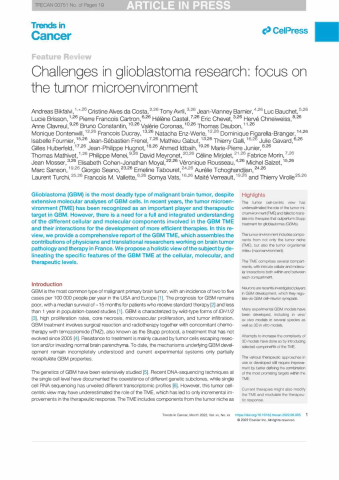
Challenges in glioblastoma research: focus on the tumor microenvironment
- Type de publi. : Article dans une revue
- Date de publi. : 13/01/2023
-
Auteurs :
Andreas BikfalviCristine Alves da CostaTony AvrilJean-Vianney BarnierLuc BauchetLucie BrissonPierre-François CartronHélène CastelÉric ChevetHerve ChneiweissAnne ClavreulBruno ConstantinValérie CoronasThomas DaubonMonique DontenwillFrançois DucrayNatacha Entz-WerléDominique Figarella-BrangerIsabelle FournierJean-Sébastien FrénelM. GabutThierry GalliJulie GavardGilles HuberfeldJean-Philippe HugnotAhmed IdbaihMarie-Pierre JunierThomas MathivetPhilippe MeneiDavid MeyronetCéline MirjoletFabrice MorinJean MosserElizabeth Cohen-Jonathan MoyalVéronique RousseauMichel SalzetMarc SansonGiorgio SeanoEmeline TabouretAurelie TchoghandjianLaurent TurchiFrançois M. ValletteSomya VatsMaïté VerreaultThierry Virolle
Fiche détaillée
Challenges in glioblastoma research: focus on the tumor microenvironment
- Type de publi. : Article dans une revue
- Date de publi. : 13/01/2023
-
Auteurs :
Andreas BikfalviCristine Alves da CostaTony AvrilJean-Vianney BarnierLuc BauchetLucie BrissonPierre-François CartronHélène CastelÉric ChevetHerve ChneiweissAnne ClavreulBruno ConstantinValérie CoronasThomas DaubonMonique DontenwillFrançois DucrayNatacha Entz-WerléDominique Figarella-BrangerIsabelle FournierJean-Sébastien FrénelM. GabutThierry GalliJulie GavardGilles HuberfeldJean-Philippe HugnotAhmed IdbaihMarie-Pierre JunierThomas MathivetPhilippe MeneiDavid MeyronetCéline MirjoletFabrice MorinJean MosserElizabeth Cohen-Jonathan MoyalVéronique RousseauMichel SalzetMarc SansonGiorgio SeanoEmeline TabouretAurelie TchoghandjianLaurent TurchiFrançois M. ValletteSomya VatsMaïté VerreaultThierry Virolle
-
Organismes :
BoRdeaux Institute of onCology
Institut de pharmacologie moléculaire et cellulaire
Oncogenesis, Stress, Signaling
CRLCC Eugène Marquis
Institut des Neurosciences Paris-Saclay
Institut de Génomique Fonctionnelle
BoRdeaux Institute of onCology
Centre de Recherche en Cancérologie et Immunologie Intégrée Nantes-Angers
Différenciation et communication neuronale et neuroendocrine
Institute for Research and Innovation in Biomedicine
Oncogenesis, Stress, Signaling
CRLCC Eugène Marquis
Neuroscience Paris Seine
Centre de Recherche en Cancérologie et Immunologie Intégrée Nantes-Angers
Centre Hospitalier Universitaire d'Angers
Canaux et Connexines dans les Cancers et Cellules Souches = Laboratory Channels and Connexins in Cancer and Cell Stemness [UMR 6041]
Canaux et Connexines dans les Cancers et Cellules Souches = Laboratory Channels and Connexins in Cancer and Cell Stemness [UMR 6041]
Institut de biochimie et génétique cellulaires
Laboratoire de Bioimagerie et Pathologies
Centre de Recherche en Cancérologie de Lyon
Centre Léon Bérard [Lyon]
Laboratoire de Bioimagerie et Pathologies
Service d'Anatomo-Cyto-Pathologie et de NeuroPathologie [Hôpital de la Timone - APHM]
Protéomique, Réponse Inflammatoire et Spectrométrie de Masse (PRISM) - U 1192
Centre Hospitalier Régional Universitaire [CHU Lille]
Différenciation et communication neuronale et neuroendocrine
Institute for Research and Innovation in Biomedicine
Centre de Recherche en Cancérologie de Lyon
Centre Léon Bérard [Lyon]
Institut de psychiatrie et neurosciences de Paris
Groupe hospitalier universitaire Paris psychiatrie & neurosciences [Paris]
Centre de Recherche en Cancérologie et Immunologie Intégrée Nantes-Angers
Centre interdisciplinaire de recherche en biologie
Institut de Génomique Fonctionnelle
Institut du Cerveau = Paris Brain Institute
Neuroscience Paris Seine
BoRdeaux Institute of onCology
Centre de Recherche en Cancérologie et Immunologie Intégrée Nantes-Angers
Centre Hospitalier Universitaire d'Angers
Hospices Civils de Lyon
Equipe CADIR (LNC - U1231)
Centre Régional de Lutte contre le cancer Georges-François Leclerc [Dijon]
Différenciation et communication neuronale et neuroendocrine
Institute for Research and Innovation in Biomedicine
Oncogenesis, Stress, Signaling
CRLCC Eugène Marquis
Centre de Recherches en Cancérologie de Toulouse
Oncopole Claudius Regaud
Institut des Neurosciences Paris-Saclay
Protéomique, Réponse Inflammatoire et Spectrométrie de Masse (PRISM) - U 1192
Centre Hospitalier Régional Universitaire [CHU Lille]
Institut du Cerveau = Paris Brain Institute
CHU Charles Foix [AP-HP]
Signalisation, radiobiologie et cancer
Institut de neurophysiopathologie
Institut de neurophysiopathologie
Institut de Biologie Valrose
Centre de Recherche en Cancérologie et Immunologie Intégrée Nantes-Angers
Institut de psychiatrie et neurosciences de Paris
Groupe hospitalier universitaire Paris psychiatrie & neurosciences [Paris]
CHU Charles Foix [AP-HP]
Institut du Cerveau = Paris Brain Institute
Institut de Biologie Valrose
- Publié dans Trends in Cancer le 26/10/2020
Résumé : Glioblastoma (GBM) is the most deadly type of malignant brain tumor, despite extensive molecular analyses of GBM cells. In recent years, the tumor microenvironment (TME) has been recognized as an important player and therapeutic target in GBM. However, there is a need for a full and integrated understanding of the different cellular and molecular components involved in the GBM TME and their interactions for the development of more efficient therapies. In this review, we provide a comprehensive report of the GBM TME, which assembles the contributions of physicians and translational researchers working on brain tumor pathology and therapy in France. We propose a holistic view of the subject by delineating the specific features of the GBM TME at the cellular, molecular, and therapeutic levels.
Fichiers liés :
Challenges.pdf
Source